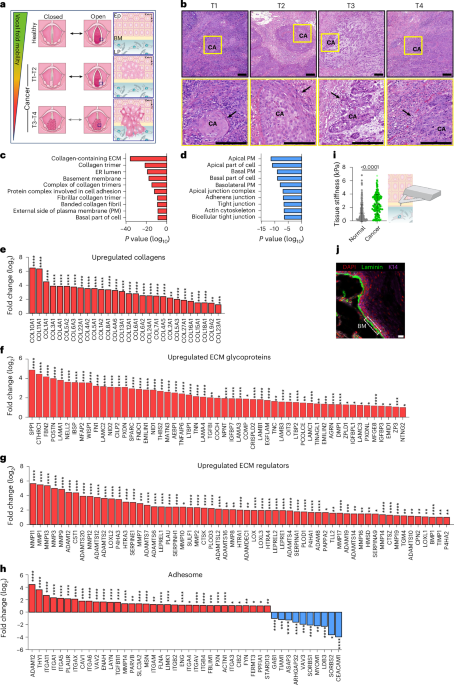
• ECM stiffness and deposition fuel vocal fold cancer progression through mechanotransduction. • Patient-derived cells show loss of laminin-binding integrins and flocking motility in advanced stages. • Mechanical stimulation (stretching/vibrations) reduces oncogenic β‑catenin and YAP nuclear localization. • Tumor ECM composition correlates with nuclear YAP levels and patient survival. • Vocal fold cancer is sensitive to Hippo pathway YAP‑TEAD inhibitors in vitro and in vivo. • Restoring tumor mechanophenotype or targeting YAP/TAZ offers a new therapeutic strategy.
Article Summaries:
- Summary
Researchers used patient‑derived cells from early (T1) and advanced (T3) vocal‑fold squamous cell carcinoma to show that tumor progression is driven by changes in the extracellular matrix (ECM) and loss of laminin‑binding integrins at cell junctions. Increased ECM stiffness promotes nuclear accumulation of oncogenic β‑catenin and YAP/TAZ, key regulators of the Hippo pathway. Mechanical stimulation mimicking normal vocal‑fold vibration reduced these nuclear signals. Immunohistochemistry linked high nuclear YAP with poorer survival, and both in‑vitro and in‑vivo experiments demonstrated that YAP‑TEAD inhibitors can suppress tumor growth. The study suggests that restoring normal mechanophenotype or targeting YAP/TAZ offers a promising therapeutic strategy for vocal‑fold cancer.
Sources: