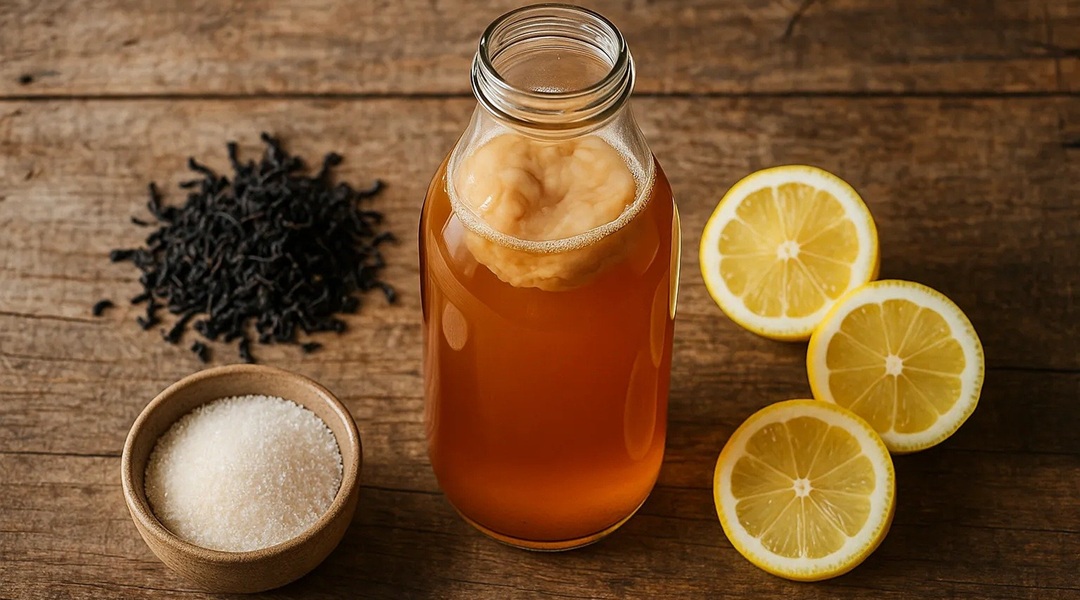
• During the COVID-19 pandemic, while some people were experimenting with homemade bread, others were focused on beverage fermentation. • Kombucha was the focus of this trend, as it was perceived as a healthy drink that boosts the immune system. • Kombucha consumption continues today, and a research group led by Yu Jun Tan, assistant professor in the Department of Mechanical Engineering at the College of Design and Engineering, National University of Singapore, has found a way to turn waste from kombucha tea fermentation into materials for sustainable electronics. • To start the fermentation and obtain a kombucha drink, you need a “SCOBY”, which stands for Symbiotic Culture of Bacteria and Yeasts. • As the fermentation proceeds, the SCOBY gets bigger and bigger. • Most of the SCOBY is composed of kombucha bacterial cellulose, a biopolymer that is a waste byproduct of the kombucha tea fermentation process.
Article Summaries:
- Researchers at the National University of Singapore have repurposed waste from kombucha fermentation into sustainable electronic components. The team extracted bacterial cellulose from the SCOBY, purified it with household chemicals, and produced a uniform, biodegradable film. Mechanical testing showed the film could withstand high temperatures, humidity, and repeated bending, rivaling conventional plastic substrates. By coating the cellulose with gold, they created conductive electrodes that remained intact after flexing. Preliminary soil‑degradation tests indicated the circuits break down rapidly, demonstrating the potential for eco‑friendly electronics that reduce reliance on petroleum‑based polymers.
Sources: