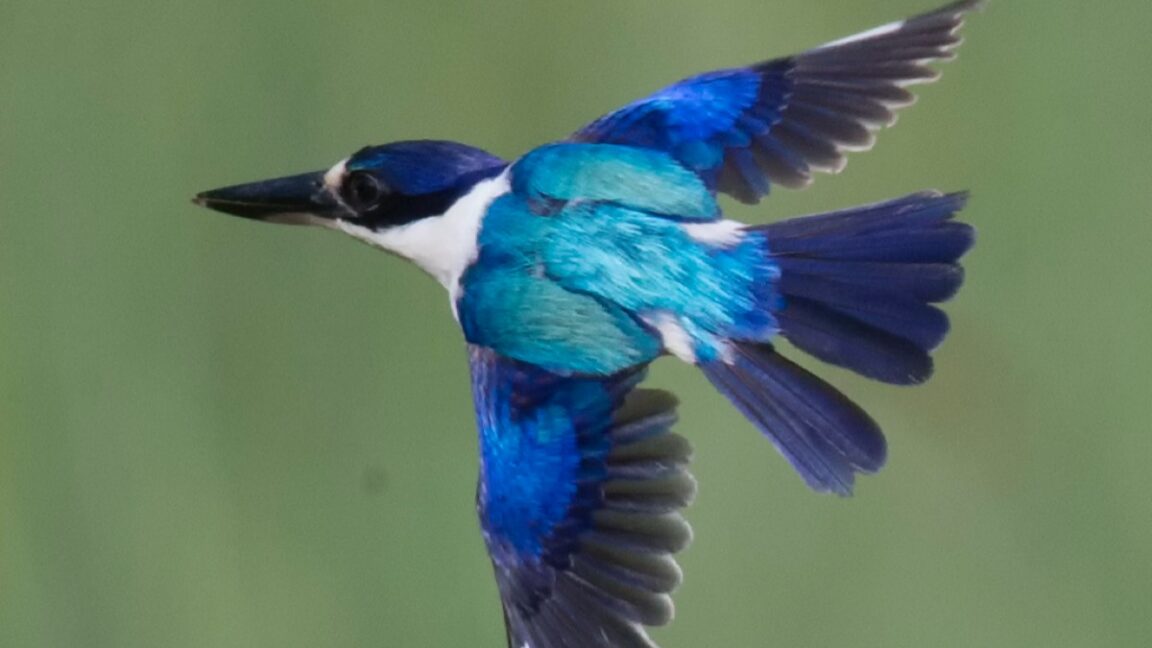
• Northwestern researchers used high-energy X-ray imaging to map kingfisher feather nanostructure. • Feathers display photonic crystals-microscopic ridges on keratin strands-creating iridescent colors. • Nanoscale resolution reveals how feather structure blocks and transmits specific light wavelengths. • Findings highlight nature’s role as a nanofabricator, inspiring tunable optical devices. • Photonic crystals can be engineered for waveguides, filters, lasers, and stealth tech. • Qing dynasty artisans prized feathers, embedding them in silver, illustrating long cultural appreciation.
Article Summaries:
- Northwestern University researchers have used high‑energy X‑ray imaging to capture the nanoscale structure of iridescent kingfisher feathers, a breakthrough presented at the American Association for the Advancement of Science meeting. The study reveals how microscopic ridges on keratin strands create photonic crystals that produce the feathers’ vivid colors without pigments. By mapping these structures in unprecedented detail, the work deepens understanding of natural photonic band‑gap materials and their potential applications in optics and materials science. The findings also highlight the historical importance of kingfisher feathers in Qing‑dynasty decorative arts, where they were prized for their dazzling hues.
- Northwestern University researchers used high‑energy X‑ray imaging to capture the nanoscale structure of iridescent kingfisher feathers, a breakthrough presented at the American Association for the Advancement of Science meeting. The study revealed the precise arrangement of microscopic ridges and keratin strands that create the feathers’ photonic crystal‑based colors, offering unprecedented detail compared to previous optical analyses. By mapping these structures, scientists can better understand how natural photonic band‑gap materials produce selective wavelengths, informing potential applications in optical devices. The work also highlights the historical significance of kingfisher feathers in Qing‑dynasty “tian‑tsui” decorative art, underscoring the intersection of science and cultural heritage.
Sources: