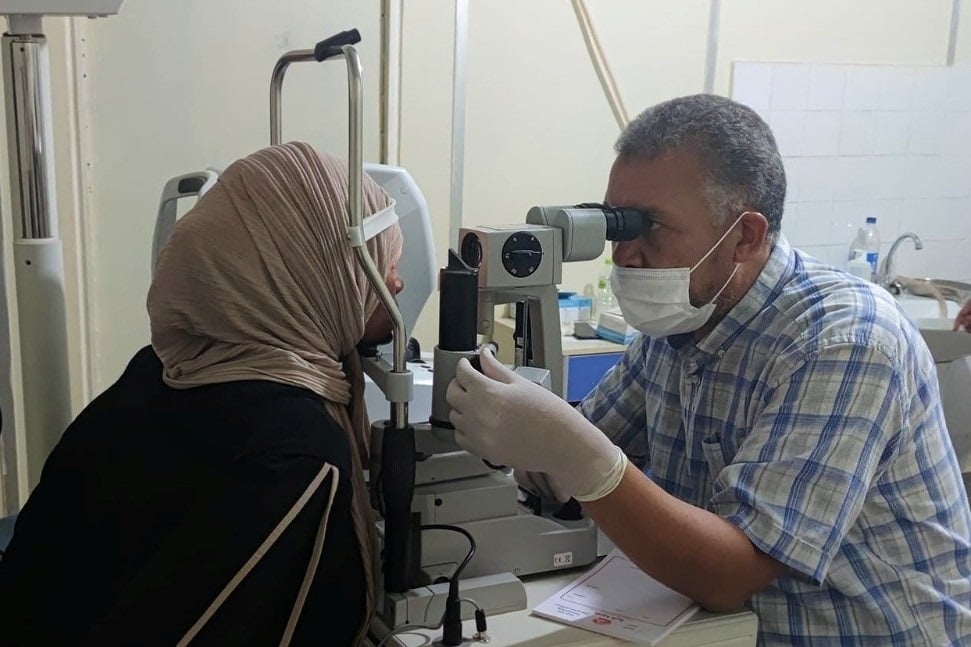
• The World Health Organization (WHO) today announced that Libya has eliminated trachoma as a public health problem, a landmark victory for public health in WHO’s Eastern Mediterranean Region. • This hard-won achievement protects future generations from preventable blindness and provides a powerful reminder that countries can overcome neglected tropical diseases despite persisting challenges. • “This milestone reflects Libya’s determination to safeguard the health of its people and reinforces our conviction that progress against neglected tropical diseases is possible everywhere,” said Dr Tedros Adhanom Ghebreyesus, WHO Director-General. • “Eliminating trachoma as a public health problem is an inspiring achievement for the Eastern Mediterranean Region and for communities across Libya.” With this validation, Libya becomes the 28th country worldwide and the 8th in the Eastern Mediterranean Region to eliminate trachoma. • The achievement demonstrates how evidence-based programming and coordinated technical support can overcome neglected tropical diseases, even amongst complex humanitarian and migration dynamics. • “Libya joins a growing group of countries from the Eastern Mediterranean Region that have eliminated trachoma,” said Dr Hanan Balkhy, WHO Regional Director for the Eastern Mediterranean.
Article Summaries:
- The World Health Organization announced that Libya has been validated as having eliminated trachoma as a public‑health problem, making it the 28th country worldwide and the 8th in the Eastern Mediterranean Region to reach this milestone. The decision follows national surveys in 2022 and 2025 that showed prevalence rates below WHO elimination thresholds, except for a single district where a trichiasis surgery campaign was carried out. Libya’s achievement is highlighted as a success of evidence‑based programming and coordinated technical support, achieved despite years of political instability, displacement, and humanitarian strain. The validation underscores that progress against neglected tropical diseases is possible even in complex settings.
Sources:
- https://www.who.int/news/item/18-02-2026-who-validates-elimination-of-trachoma-as-a-public-health-problem-in-libya (Latest source article published: 2026-02-18 14:24 UTC)