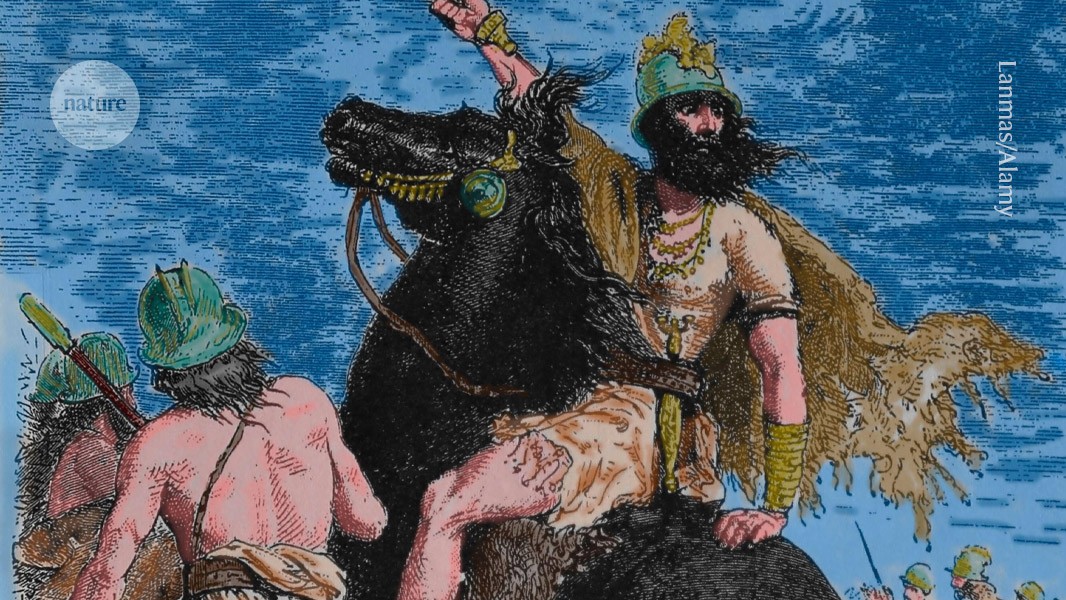
• Email Bluesky Facebook LinkedIn Reddit Whatsapp X A ninth-century mass grave in Gomolava in southeastern Europe reveals violent social upheavals.Credit: Lanmas/Alamy A mass grave from a ninth-century site in Gomolava, Serbia, has been revealed to contain the bodies of dozens of women and children who died in targeted attacks. • The massacre presents an unprecedented case of violence targeted at women and children in the European early Iron Age, raising questions about the changing sociopolitical landscape at the time. • The analysis of 77 bodies at Gomolava, published on 23 February inNature Human Behaviour1, revealed strategic violence on a scale and selectiveness that was “certainly new” to researchers studying the time period, says study co-author Linda Fibiger, a bioarchaeologist at the University of Edinburgh, UK. • The findings give clues to shifts in power, violence and gender relations in the region, probably brought about by interactions between migrant and settled communities. • Archaeological evidence suggests that groups of women and children were more commonly captured for ransom, work or procreation than targeted for massacre, says Mario Novak, a bioarchaeologist at the Institute for Anthropological Research in Zagreb. • The gender bias of violence recorded at Gomolava was remarkable for the period and region.
Article Summaries:
- A 9th‑century mass grave at Gomolava, Serbia, has yielded 77 human remains, predominantly women and children, that show evidence of targeted violence rather than disease. Bioarchaeological, genetic and isotopic analyses revealed that most victims were unrelated, with only one mother‑daughter trio, and many originated outside the Carpathian Basin. The absence of pathogenic DNA rules out a pandemic, supporting the conclusion that the deaths were the result of a deliberate, gender‑biased massacre. The findings, published in Nature Human Behaviour, suggest that interactions between migrant and settled communities in southeastern Europe may have triggered a period of heightened conflict and shifting power dynamics during the early Iron Age.
- Thank you for visiting nature.com. You are using a browser version with limited support for CSS. To obtain the best experience, we recommend you use a more up to date browser (or turn off compatibility mode in Internet Explorer). In the meantime, to ensure continued support, we are displaying the site without styles and JavaScript. A mass grave from a ninth-century site in Gomolava, Serbia, has been revealed to contain the bodies of dozens of women and children who died in targeted attacks. The massacre presents an unprecedented case of violence targeted at women and children in the European e
Sources:
- https://www.nature.com/articles/d41586-026-00535-7 (Latest source article published: 2026-02-25 06:45 UTC)