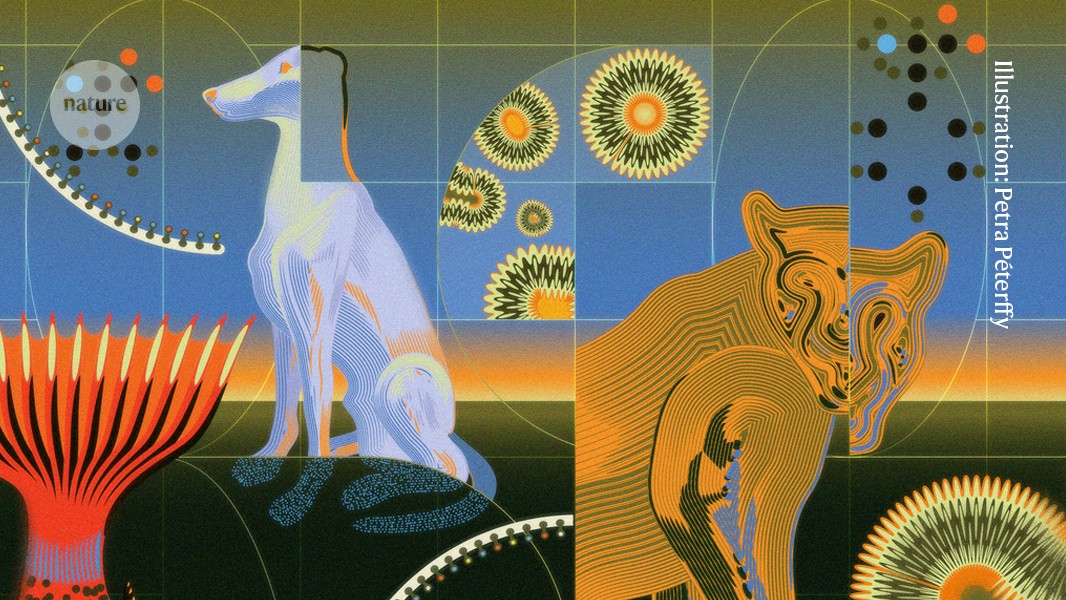
• Email Bluesky Facebook LinkedIn Reddit Whatsapp X Illustration: Petra Péterffy On the Future of Species: Authoring Life by Means of Artificial Biological IntelligenceAdrian WoolfsonBloomsbury (2026) Biology is undergoing a transformation. • After centuries of studying life as it evolves naturally, researchers are now using a combination of computation and genome engineering to intervene,generating new proteinsand even whole bacteria from scratch. • The use of artificial-intelligence tools to design biological components, an approach known as generative biology, is set to turbocharge this area of research. • Just last year, scientists used AI-assisted design to produce artificial genes that can be expressed in mammalian cells and, for the first time, an AI program was used to create an entirely synthetic virus. • A new vision for how evolution works is long overdue A new vision for how evolution works is long overdue This approach is much more than just a series of technical feats. • It could transform how life on Earth develops, as biochemist Adrian Woolfson describes in his latest book.On the Future of Speciesprovides a sweeping account of the history and science behind this transformational technology, from the first gene-sequencing efforts to the rise of AI-powered techniques.
Article Summaries:
- Adrian Woolfson’s new book, On the Future of Species, charts how artificial‑intelligence-driven generative biology is reshaping life sciences. Recent breakthroughs include AI‑designed artificial genes that function in mammalian cells and the first fully synthetic virus created by a machine‑learning program. Woolfson argues that computational tools are making gene‑sequence patterns increasingly predictable, enabling precise genome editing for disease correction, novel protein synthesis, and environmental remediation. He envisions a future “species catalogue” that would let researchers design organisms for specific purposes, and ultimately artificial biological intelligence capable of generating complete genomes from scratch. Current limits-complex gene‑gene interactions and developmental context-still hinder full realization.
- Thank you for visiting nature.com. You are using a browser version with limited support for CSS. To obtain the best experience, we recommend you use a more up to date browser (or turn off compatibility mode in Internet Explorer). In the meantime, to ensure continued support, we are displaying the site without styles and JavaScript. On the Future of Species: Authoring Life by Means of Artificial Biological IntelligenceAdrian Woolfson Bloomsbury (2026) Biology is undergoing a transformation. After centuries of studying life as it evolves naturally, researchers are now using a combination of comp
Sources:
- https://www.nature.com/articles/d41586-026-00566-0 (Latest source article published: 2026-02-25 06:45 UTC)