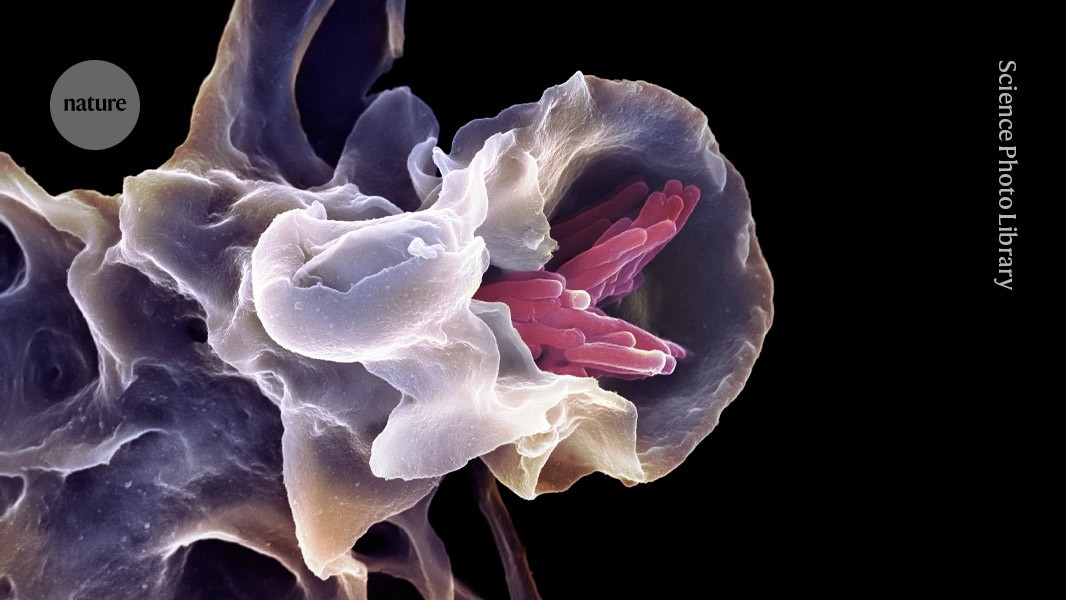
• Email Bluesky Facebook LinkedIn Reddit Whatsapp X A macrophage - a ‘first responder’ cell in the innate immune system - in the process of engulfing aMycobacterium tuberculosisbacterium.Credit: Science Photo Library Imagine if a nasal spray could make you immune not only to the viruses that cause COVID-19 and influenza, but to all respiratory diseases. • In a paper1published inSciencetoday, researchers describe a vaccine that has done just that. • When given to mice, the vaccine protected them for at least three months against multiple disease-causing viruses and bacteria - including the SARS-CoV-2 virus that causes COVID-19 - and even quelling responses to respiratory allergens. • If the research translates to humans safely and effectively, such a ‘universal vaccine’ could be offered to everyone at the start of each winter - and perhaps provide a first line of defence against future pandemics. • Bali Pulendran, an immunologist at Stanford University in Palo Alto, California, and his group previously studied the Bacillus Calmette-Guérin (BCG) vaccine2, which provides temporary protection against numerous diseases and works by activating the innate immune system and keeping it active. • This evolutionarily ancient system has a much broader reactivity than does the adaptive immune system - which is the one conventional vaccines utilize by teaching antibody-making B cells and T cells to recognize proteins found on specific pathogens.
Article Summaries:
- Researchers at Stanford have shown that a nasal spray vaccine can protect mice for at least three months against a range of respiratory viruses and bacteria, including SARS‑CoV‑2, and even dampen allergic asthma responses. The vaccine combines two innate‑immune‑stimulating drugs with a protein that activates T cells, creating a “two‑bulwark” defense that first blocks pathogen entry and then rapidly triggers specific antiviral responses. In trials, four doses conferred broad protection and prevented allergic sensitization. If the approach proves safe and effective in humans, it could be offered each winter as a first‑line defense against seasonal infections and future pandemics.
Sources: