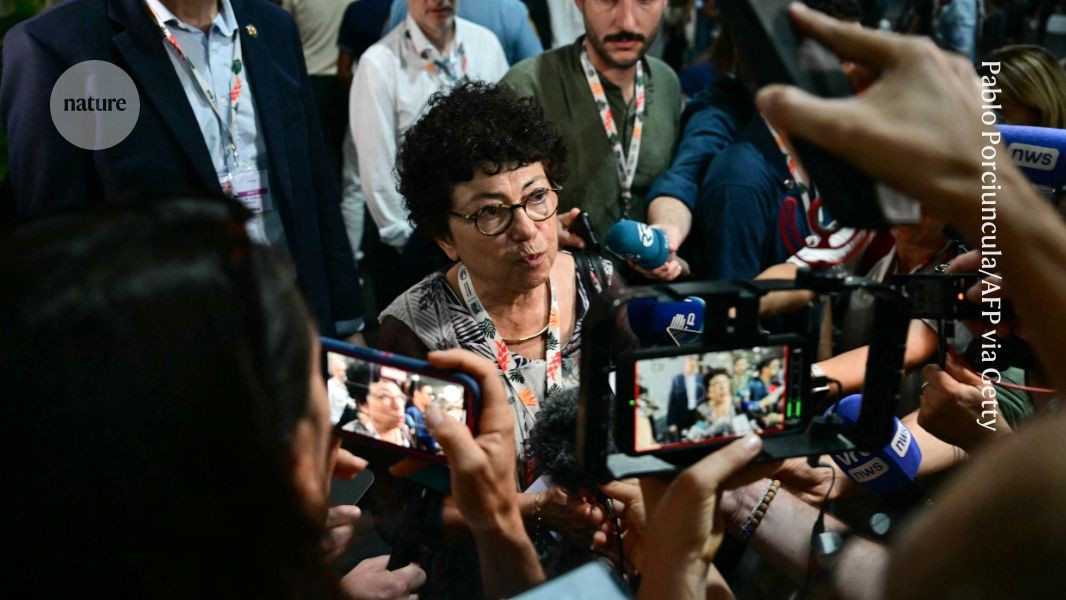
• Email Bluesky Facebook LinkedIn Reddit Whatsapp X Environmental journalists at last year’s COP30 climate meeting in Belém, Brazil, interview the French ecology and biodiversity minister Monique Barbut.Credit: Pablo Porciuncula/AFP via Getty In June 2025, a year-long investigation exposed an illegal trade smuggling timber from protected areas in the Congolese rainforest into neighbouring Burundi. • Award-winning Burundian journalist Arthur Bizimana and his collaborator Martin Leku, from the Democratic Republic of the Congo, risked their safety by travelling deep into the rainforest - the world’s second-largest - to gather material fortheir exclusive storyon the impact on this crucial carbon sink. • Their assignment was financially supported by InfoNile, a journalism network focusing on cross-border investigations in the Nile Basin, and Global Forest Watch, a data platform funded by the United Nations Environment Programme and the United States Agency for International Development (USAID), among others. • It’s the kind of in-depth investigative work that far exceeds the reporting budgets of most research news publications, such asNatureorScience- and that attracts little attention from large media organizations and newspapers. • Often, such reporting is made possible only because of grants given to journalists by private philanthropies or government donors. • But with these grants drying up as philanthropic donors tighten their purse strings in the wake of US-led cuts to international development and health budgets, the ability of journalists such as Bizimana and Leku to hold power to account is diminishing.
Article Summaries:
- In June 2025, an investigation by Burundian journalist Arthur Bizimana and Congolese reporter Martin Leku exposed illegal timber smuggling from the Congo rainforest into Burundi. Their work, funded by InfoNile and Global Forest Watch-both supported by the United Nations Environment Programme and the U.S. Agency for International Development (USAID)-highlights the high cost of in‑depth science journalism. With USAID shut down by President Trump’s administration, philanthropic donors are tightening budgets, leaving grants for investigative reporting scarce. Romanian journalist Marius Dragomir warns that this funding squeeze threatens accountability and the coverage of critical science issues worldwide.
Sources: