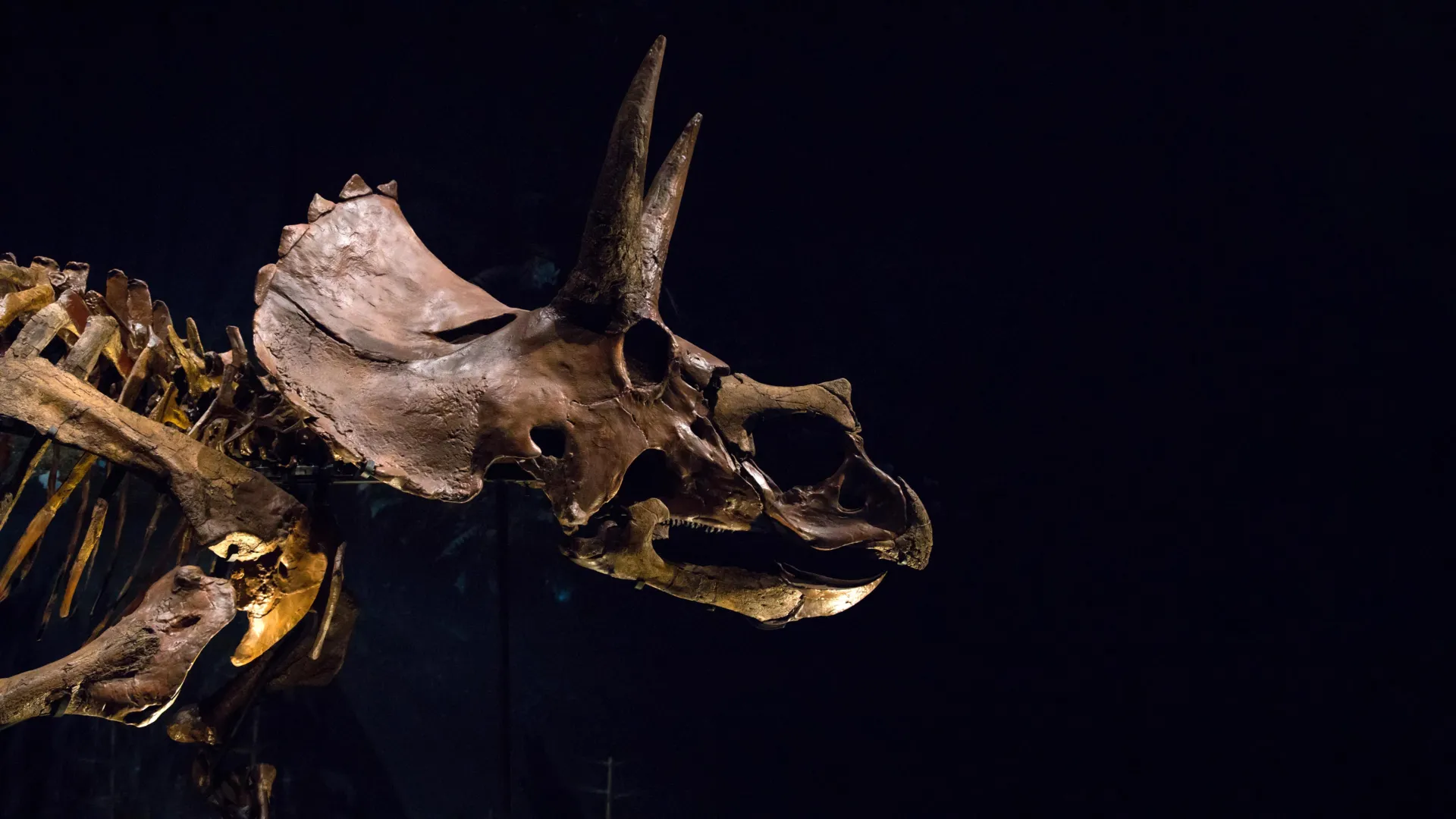
• Triceratops had a giant nose that may have cooled its massive head Hidden inside Triceratopsâ massive skull was a surprisingly advanced nasal system. • Triceratopsand other horned dinosaurs had exceptionally large nasal cavities compared to most animals. • To better understand what filled that space, researchers including a team from the University of Tokyo analyzed CT scans of fossilizedTriceratopsskulls. • They compared those scans with the snout anatomy of living animals such as birds and crocodiles. • By combining direct examination with informed reconstruction, they mapped out how nerves, blood vessels, and air passages likely fit inside the skull. • Their findings suggest these dinosaurs used their noses for more than smell.
Article Summaries:
- Summary
Researchers from the University of Tokyo used CT scans and 3‑D reconstructions of fossil Triceratops skulls to reveal a complex nasal system hidden within the dinosaur’s enormous snout. The study shows that, unlike most reptiles, nerves and blood vessels entered the skull through the nasal passage rather than the jaw, a structural adaptation to the large nasal cavity. The researchers propose that this intricate network helped regulate heat and moisture, suggesting the Triceratops’ nose served functions beyond olfaction. The findings provide the first comprehensive hypothesis of soft‑tissue anatomy in horned dinosaurs.
Sources: