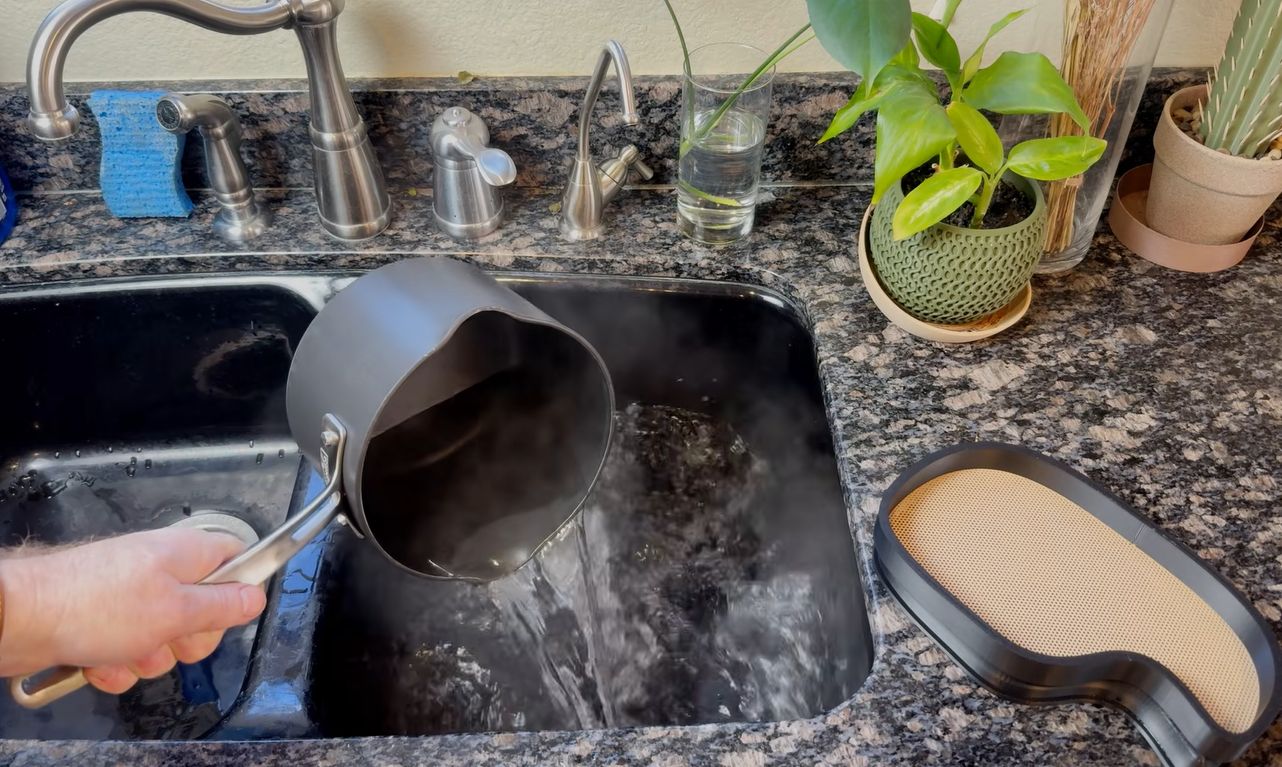
• Thermoforming is the process of softening a material enough so that it can be tweaked into a new shape, with the source of the thermal energy being not particularly relevant. • Correspondingly, after [Zion Brock]’s recent video on his journey into thermoforming PLA with a mold and a heat gun, he got many comments suggesting that heshould use hot water instead. • We coveredhis previous videoas well, in which he goes through the design steps of making these grilles for a retro-styled, 3D printed radio. • The thermoforming method enables him to shape the curvy grille with a heat gun and two-piece mold in a matter of minutes, rather than spending hours more time printing and removing many supports. • Theoretically using hot water instead of hot air would provide a more equal application of heat, but putting your hands into 70°C water does require some more precautions. • There’s also the issue that PLA is very hygroscopic, so the part requires drying afterwards to prevent accelerated hydrolysis.
Article Summaries:
- Zion Brock’s recent video on thermoforming PLA with a mold and heat gun sparked discussion about using hot water instead of hot air. Proponents argue that 70 °C water delivers more uniform heating, reducing the time needed to shape curved parts such as retro‑styled radio grilles. However, the method requires careful handling, and PLA’s hygroscopic nature means parts must be dried afterward to avoid hydrolysis. The even heat can soften the mold‑clamped edges, causing parts to pop out and necessitating design tweaks. While aqua‑thermoforming is slower and less convenient, it offers a reliable alternative for shaping 3D‑printed PLA, as demonstrated by e‑NABLE’s prosthetic hand prototype.
Sources: