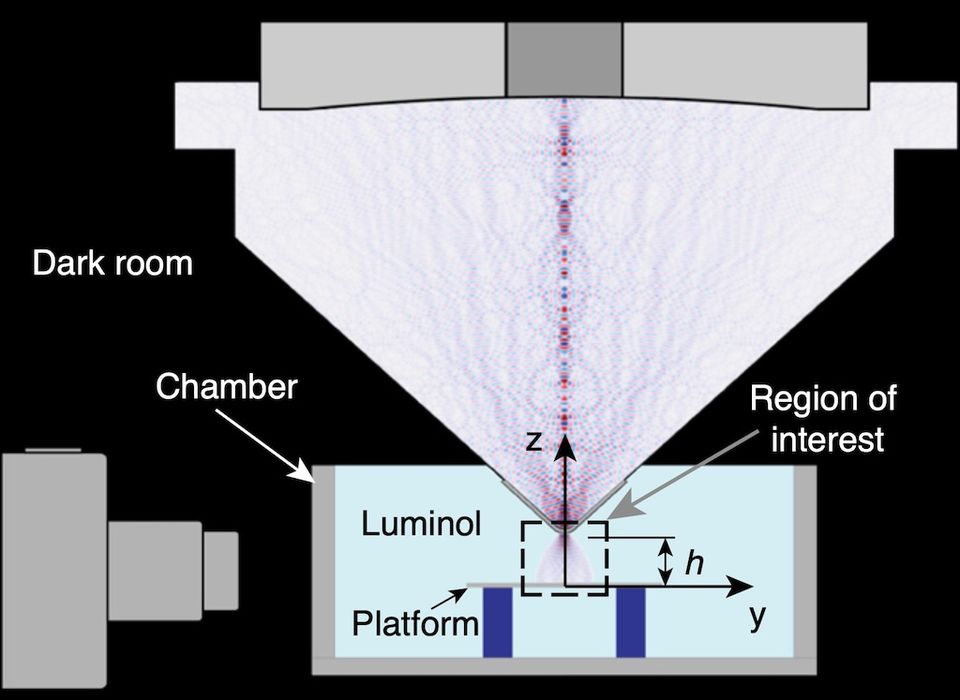
• Proximal Sound Printing (PSP) is a new sound driven additive manufacturing process that claims it can directly 3D print fine PDMS microstructures with far better resolution and repeatability than earlier “sound printing” attempts. •  Polydimethylsiloxane (PDMS) is the go-to elastomer in microfluidics and soft lithography applications because it is biocompatible, optically clear, and easy to handle in labs. • The problem is that PDMS is a heat curing thermoset, and most 3D printing processes require either photopolymers (SLA and DLP) or carefully tuned rheology (direct ink writing). • Those routes typically push you into custom resin chemistry, incompatible initiators, or support baths, and the “native” PDMS formulation that researchers really want often gets compromised. • A team led by Muthukumaran Packirisamy at Concordia University (with collaborators at UC Davis) has been working on ultrasound driven curing for a while under the banner of Direct Sound Printing (DSP). • In their earlier concept, focused ultrasound creates cavitation bubbles, and the bubble collapse triggers sonochemical reactions that drive polymerization in heat curing resins.
Article Summaries:
- Proximal Sound Printing (PSP) is a new sound driven additive manufacturing process that claims it can directly 3D print fine PDMS microstructures with far better resolution and repeatability than earlier “sound printing” attempts.  Polydimethylsiloxane (PDMS) is the go-to elastomer in microfluidics and soft lithography applications because it is biocompatible, optically clear, and easy to handle in labs. The problem is that PDMS is a heat curing thermoset, and most 3D printing processes require either photopolymers (SLA and DLP) or carefully tuned rheology (direct ink writing). Those routes t
Sources:
- https://www.fabbaloo.com/news/proximal-sound-prints-elastomer-microstructures-using-ultrasound (Latest source article published: 2026-02-20 16:08 UTC)