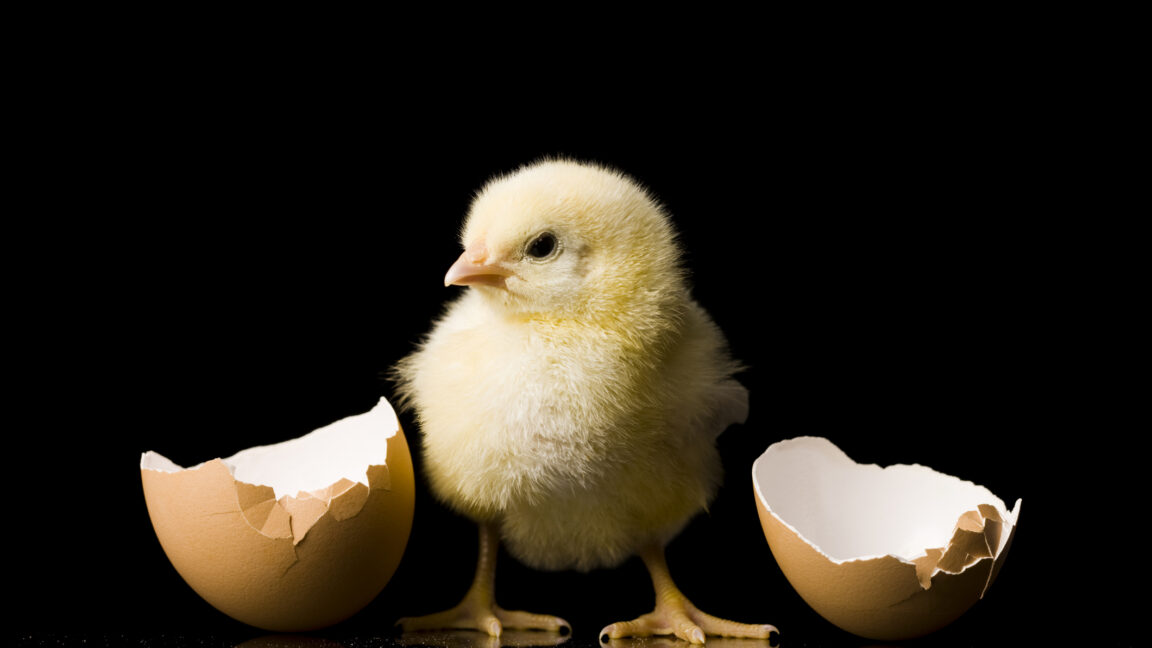
• Does “bouba” sound round to you? • Neither are real words, but we’ve known for decades that people who hear them tend to associate them with round objects. • There have been plenty of ideas put forward about why that would be the case, and most of them have turned out to be wrong. • Now, in perhaps the weirdest bit of evidence to date, researchers have found that even newly hatched chickens seem to associate “bouba” with round shapes. • The initial finding dates all the way back to 1947, when someone discovered that people associated some word-like sounds with rounded shapes, and others with spiky ones. • In the years since, that association got formalized as the bouba/kiki effect, received a fair bit of experimental attention, and ended up withan extensive Wikipedia entry.
Article Summaries:
- Italian researchers have shown that the “bouba/kiki” sound‑shape association, long documented in humans and infants but absent in other primates, also appears in newly hatched chickens. The study, conducted by Maria Loconsole, Silvia Benavides‑Varela, and Lucia Regolin, tested chicks only one to three days old-fully mobile and able to explore their surroundings. When presented with the non‑words “bouba” and “kiki” paired with round or spiky shapes, the chicks consistently matched “bouba” to round objects. This finding suggests that the perceptual link between phonetic cues and visual form may be rooted in early, non‑human sensory processing rather than being uniquely human.
Sources: