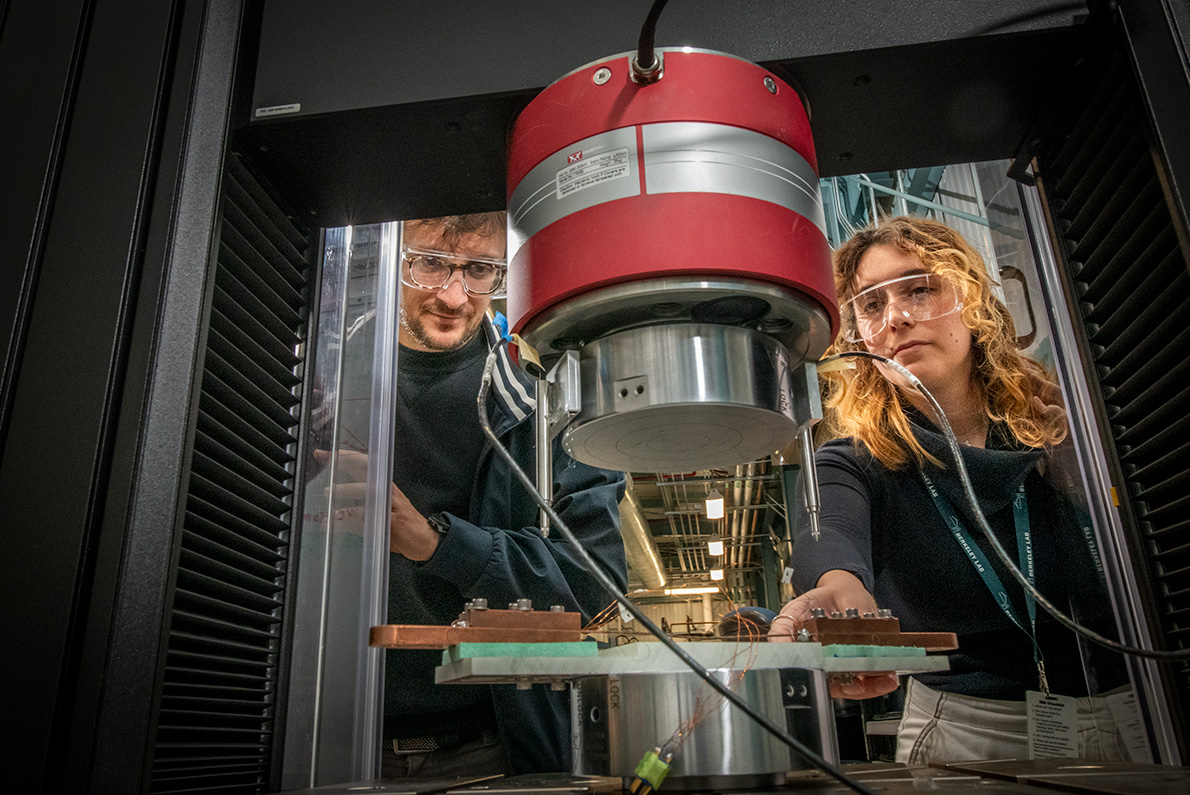
• In 1929, Ernest Orlando Lawrence invented the cyclotron: a compact, efficient particle accelerator that used magnets. • Two years later, he founded what would become the Department of Energy’s Lawrence Berkeley National Laboratory (Berkeley Lab). • Born with magnets in its DNA, the lab has been making innovative and record-setting magnet technology ever since. • In turn, those tools have advanced multiple fields, including medicine, materials, and fundamental physics. • And the technologies now under development could make magnets more powerful, accelerators more efficient, and even open up new energy sources with fusion systems. • Over the decades, magnet research and development has brought together scientists, engineers, and technicians from across Berkeley Lab, particularly from the Accelerator Technology & Applied Physics (ATAP), Engineering, and Nuclear Science divisions.
Article Summaries:
- In 1929, Ernest Orlando Lawrence invented the cyclotron: a compact, efficient particle accelerator that used magnets. Two years later, he founded what would become the Department of Energy’s Lawrence Berkeley National Laboratory (Berkeley Lab). Born with magnets in its DNA, the lab has been making innovative and record-setting magnet technology ever since. In turn, those tools have advanced multiple fields, including medicine, materials, and fundamental physics. And the technologies now under development could make magnets more powerful, accelerators more efficient, and even open up new energy
Sources: