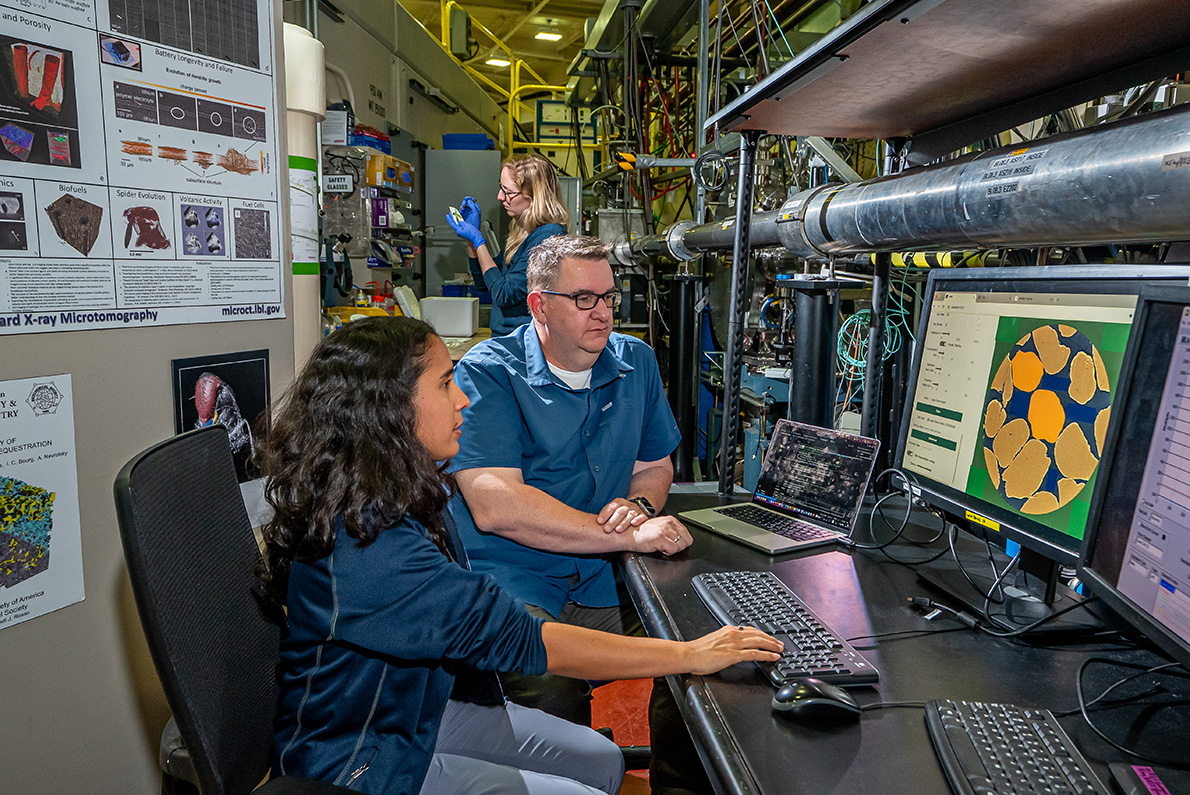
• How a Machine Learning Pipeline Could Accelerate Innovation Article AI Lawrence Berkeley National Laboratory (Berkeley Lab) is working to transform petabytes of imaging data from advanced light and neutron scattering user facilities in the U.S. • into actionable knowledge, demonstrating AI-accelerated advanced discovery capabilities that can be applied to energy, semiconductors, medicine, and other essential technologies. • The multi-lab effort, called SYNAPS-I (SYnergistic Neutron and Photon Science - Intelligence), is part of theGenesis Mission, a new national initiative led by the Department of Energy to advance AI and accelerate discovery, providing solutions for challenges in science, energy, and national security. • A cornerstone of the Genesis Mission is the Transformational AI Models Consortium, which will build and deploy self-improving AI models by harnessing DOE’s unique data, facilities, and expertise. • SYNAPS-I is one of three AI model teams that Berkeley Lab leads or plays a key role in, building onAI expertisein high-performance computing, managing large datasets, and pioneering AI models in partnership with industry. • “Our national lab facilities are already world leaders in scientific discovery.
Article Summaries:
- Berkeley Lab’s SYNAPS‑I project, part of the Department of Energy’s Genesis Mission, is developing a machine‑learning pipeline to turn petabytes of imaging data from U.S. light‑ and neutron‑scattering facilities into actionable insights. The initiative will embed large AI and foundation models directly into the analysis workflow at seven Basic Energy Sciences user sites, including the Advanced Light Source (ALS) and its recent upgrade. By pooling data and expertise across national labs, universities, and industry partners, SYNAPS‑I aims to accelerate discovery in energy, semiconductors, medicine, and other critical fields, demonstrating AI‑accelerated advanced discovery capabilities.
Sources: