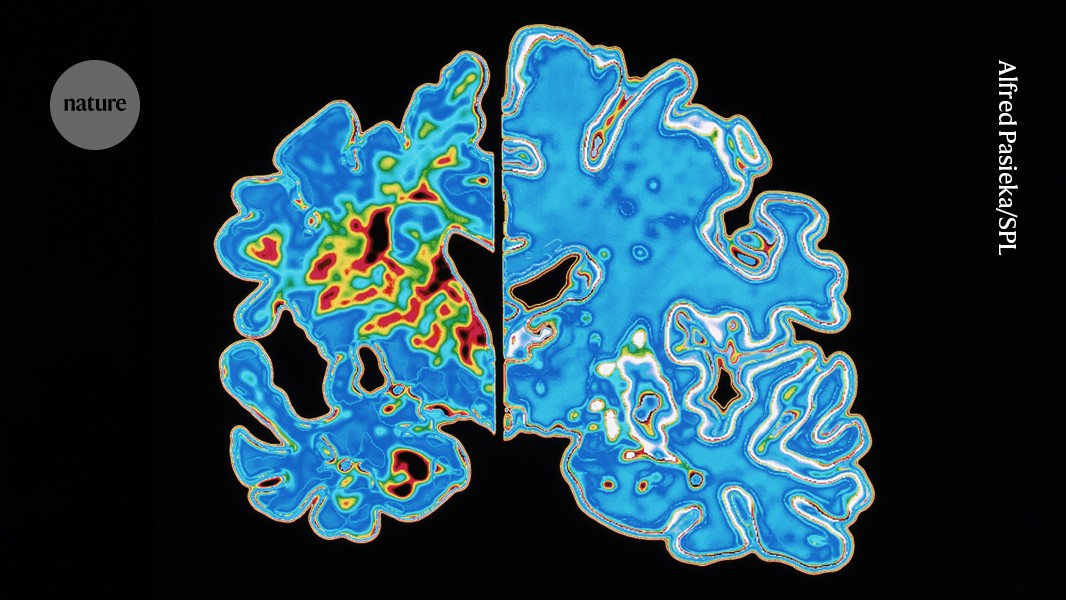
• Email Bluesky Facebook LinkedIn Reddit Whatsapp X Abnormal tau proteins can form tangled fibres that accumulate in the brains of people with Alzheimer’s (slice at left). • (Brain without Alzheimer’s shown at right.)Credit: Alfred Pasieka/Science Photo Library A simpleblood testmight one day serve as a molecular ‘clock’ that predicts not only whether someone will developAlzheimer’s disease- but when. • Blood tests are now approved for Alzheimer’s: how accurate are they? • Blood tests are now approved for Alzheimer’s: how accurate are they? • The test, published inNature Medicineon 19 February1, is based on an abnormal form of a protein called tau that circulates in the blood, and begins to accumulate in the brains of people with Alzheimer’s well before symptoms such as memory loss appear. • If validated in larger studies, the test could provide a way to intervene in the neurodegenerative disease at an earlier stage, when treatment is more likely to be effective.
Article Summaries:
- A new blood test, reported in Nature Medicine on 19 February, detects an abnormal form of the tau protein that circulates before Alzheimer’s symptoms appear. The study suggests the test could predict when memory loss and other signs will emerge, enabling earlier intervention when treatments are more likely to work. It also offers a measurable biomarker that could streamline and reduce the cost of clinical trials for Alzheimer’s therapies. However, researchers caution that larger validation studies are needed and that the test is not yet recommended for use by cognitively healthy individuals.
Sources: