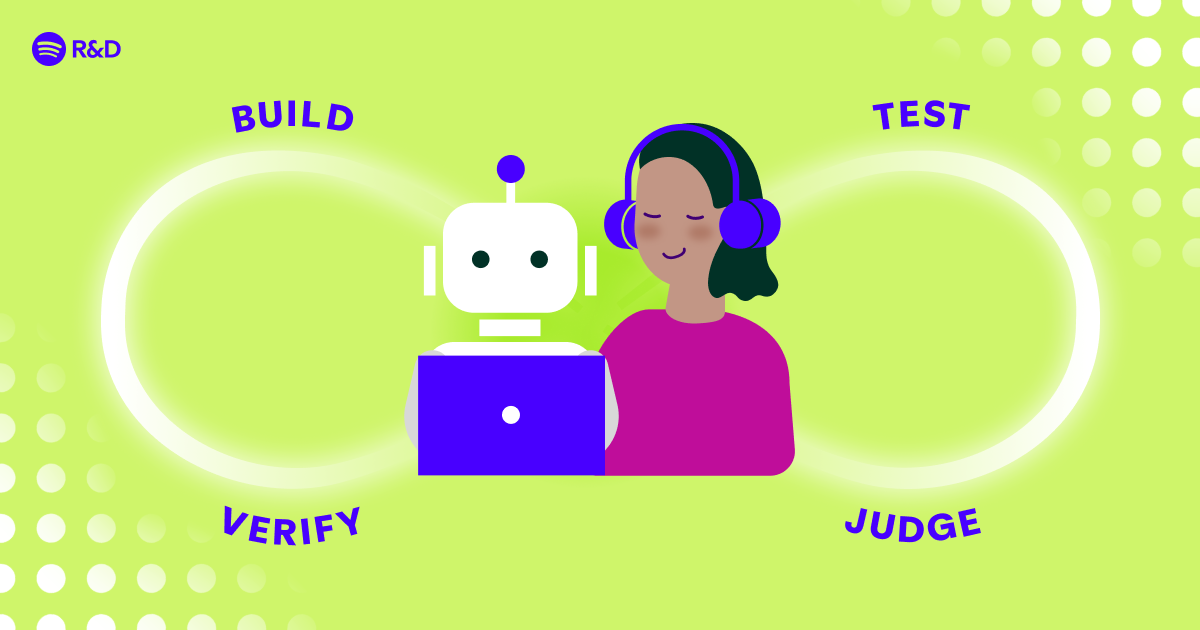
• Background Coding Agents: Predictable Results Through Strong Feedback Loops (Honk, Part 3) This is part 3 in our series about Spotify’s journey with background coding agents (internal codename: “Honk”) and the future of large-scale software maintenance. • See alsopart 1andpart 2. • In Part 2, we explored how we enabled our Fleet Management system to use agents to rewrite our software automatically. • We also explored how to write good prompts that allow the agent to best work without needing human input. • In this blog post, we attempt to answer a new question: 👉What environment does an agent, running without direct human supervision, need to produce correct and reliable results as often as possible? • How things fail On a high level, when we run agentic code changes across thousands of differentsoftware components, we worry about three primary failure modes.
Article Summaries:
- Spotify’s “Honk” background coding agents automatically rewrite large codebases, but the company identified three key failure modes: no pull request (PR) generated, PRs that fail continuous integration (CI), and PRs that pass CI yet contain functional errors. To mitigate these risks, Spotify introduced a verification‑loop architecture. The agent calls independent verifiers-such as a Maven verifier triggered by a pom.xml-without knowing their internal workings. These verifiers provide incremental feedback, guiding the agent toward correct changes while preserving the agent’s context window. The design aims to make automated code changes predictable and trustworthy across thousands of components.
Sources:
- https://engineering.atspotify.com/2025/12/feedback-loops-background-coding-agents-part-3/ (Latest source article published: 2025-12-09 15:14 UTC)