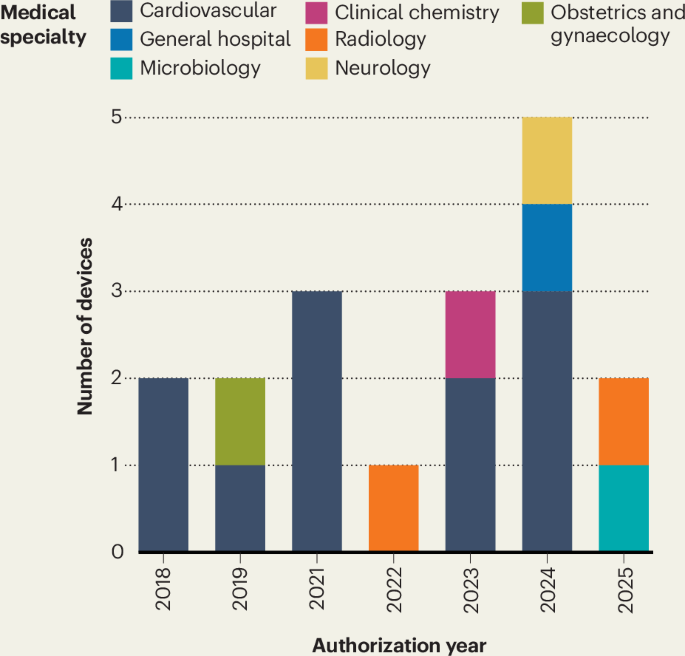
• Subjects Health policy Medical humanities Less than 2% of artificial intelligence devices authorized by the US Food and Drug Agency are prognostic, with prediction horizons ranging from minutes to several years. • As the number of prognostic AI devices could increase, it is important to address the accompanying regulatory and ethical challenges. • This is a preview of subscription content,access via your institution Access options Access Nature and 54 other Nature Portfolio journals Get Nature+, our best-value online-access subscription 27,99 €/ 30 days cancel any time Subscribe to this journal Receive 12 digital issues and online access to articles 111,21 € per year only 9,27 € per issue Buy this article Purchase on SpringerLink Instant access to the full article PDF. • 39,95 € Prices may be subject to local taxes which are calculated during checkout References Thomas, J. • Med.179, 820 (2019).ArticleGoogle Scholar Thomas, J. • ArticleGoogle Scholar Riley, R.
Article Summaries:
- Less than 2% of artificial intelligence devices authorized by the US Food and Drug Agency are prognostic, with prediction horizons ranging from minutes to several years. As the number of prognostic AI devices could increase, it is important to address the accompanying regulatory and ethical challenges. This is a preview of subscription content, access via your institution Access options Access Nature and 54 other Nature Portfolio journals Get Nature+, our best-value online-access subscription 27,99 € / 30 days cancel any time Subscribe to this journal Receive 12 digital issues and online acces
Sources: