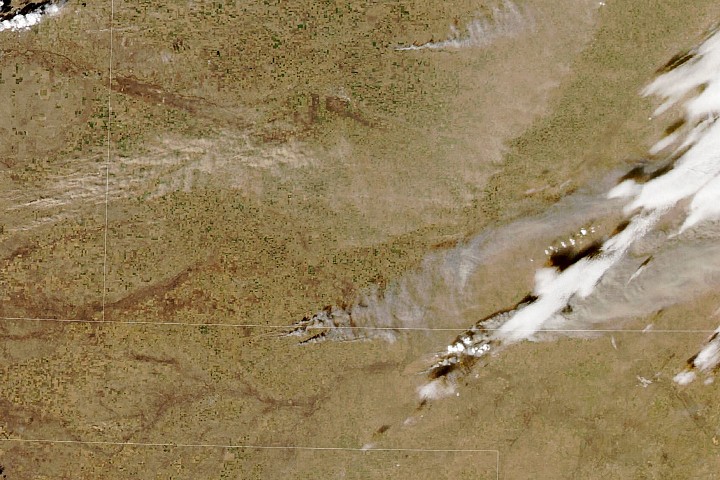
• 3 min read Winds Whip Up Fires and Dust on the Southern Plains Dry, gusty conditions spurred fast-growing fires in Oklahoma and Kansas, along with dangerous dust storms across the region. • NASA Earth Observatory Aqua-MODIS Dust Storms Wildfires High winds coupled with dry conditions fueled fast-spreading wildland fires in the U.S. • southern Plains in winter 2026. • On February 17, several large blazes broke out on the Oklahoma Panhandle and burned quickly through tens of thousands of acres of grasslands and shrublands. • The winds also caused dust storms and low visibility throughout the wider region. • Smoke from multiple fires as well as wind-borne dust streamed across the Plains on the afternoon of February 17, when theMODIS(Moderate Resolution Imaging Spectroradiometer) on NASA’sAquasatellite acquired this image.
Article Summaries:
- On Feb. 17, 2026, strong winds and dry conditions sparked a series of fast‑spreading wildland fires across the Oklahoma and Texas panhandles, with the Ranger Road fire near Beaver, Oklahoma, becoming the largest blaze. The fire rapidly expanded, consuming about 145,000 acres and spilling into Kansas, while other nearby fires added another 10,000 acres, bringing the total to over 155,000 acres burned that day. Evacuation orders were issued for parts of western Oklahoma and southern Kansas, and Oklahoma’s governor declared a disaster emergency. Fires grew on Feb. 18, and a red‑flag warning remained in effect on Feb. 19. Wind‑blown dust also caused hazardous visibility, leading to vehicle pile‑ups on I‑25 in Colorado and warnings in New Mexico.
- High winds and dry conditions ignited fast‑spreading wildland fires across the U.S. southern Plains in February 2026. On February 17, the Ranger Road fire near Beaver, Oklahoma, grew to an estimated 145,000 acres, with additional blazes in the Panhandle adding over 155,000 acres burned that day. Wind gusts up to 70 mph fueled rapid spread, prompting evacuation orders in western Oklahoma and southern Kansas and a disaster‑emergency declaration by the governor. Fires continued to expand on February 18, and a red‑flag warning remained in effect through February 19. Dust storms from the fires caused low visibility and a deadly pileup on Interstate 25 in Colorado.
Sources: