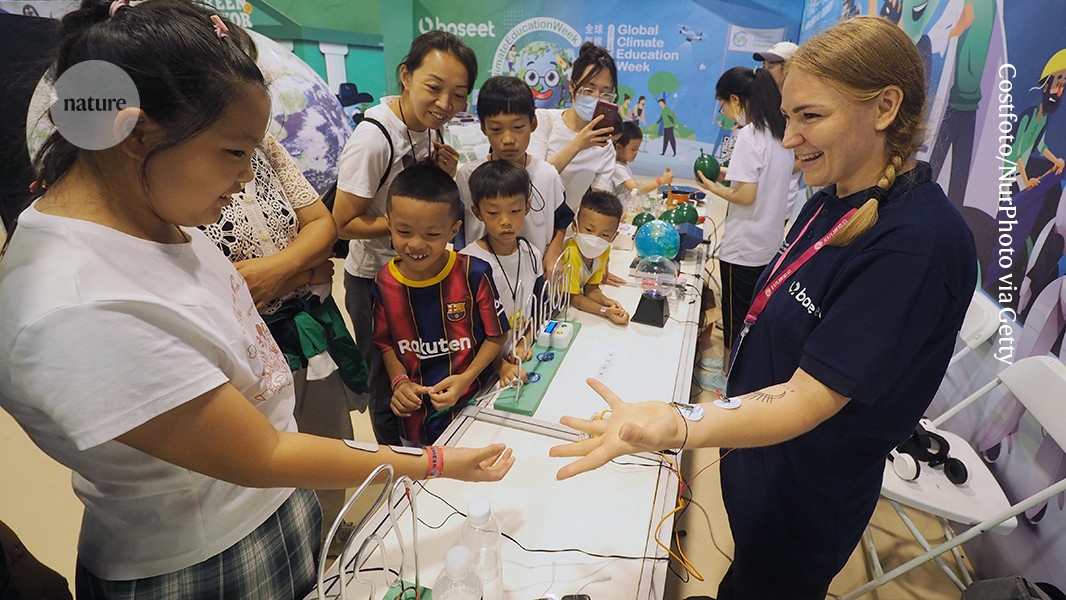
• Email Bluesky Facebook LinkedIn Reddit Whatsapp X Children are taught about the conduction of electricity at a science festival in China.Credit: Costfoto/NurPhoto via Getty Around the world, the scientific community is confronting challenges to its cultural authority.Funding is under pressure, expertise issubject to political attack, andvaccine scepticismanddisputes over climate policyare rife1. • This is often interpreted as a problem of the public - a result of limited scientific literacy, declining trust in experts and misinformation - rather than of science itself. • Yet, working with limited assessment tools, it is striking how little knowledge researchers have about the extent to which the public understands science2. • Science’s big problem is a loss of influence, not a loss of trust Science’s big problem is a loss of influence, not a loss of trust Scientists and researchers who study public understanding should reckon with their own role in this cultural disconnect. • In particular, they need to reimagine the ways in which scientific literacy and trust have long been conceptualized and measured. • For decades, researchers have relied mainly on surveys - asking what people know or how much confidence they have in scientists and experts.
Article Summaries:
- Thank you for visiting nature.com. You are using a browser version with limited support for CSS. To obtain the best experience, we recommend you use a more up to date browser (or turn off compatibility mode in Internet Explorer). In the meantime, to ensure continued support, we are displaying the site without styles and JavaScript. Around the world, the scientific community is confronting challenges to its cultural authority. Funding is under pressure, expertise is subject to political attack, and vaccine scepticism and disputes over climate policy are rife1. This is often interpreted as a pro
Sources: