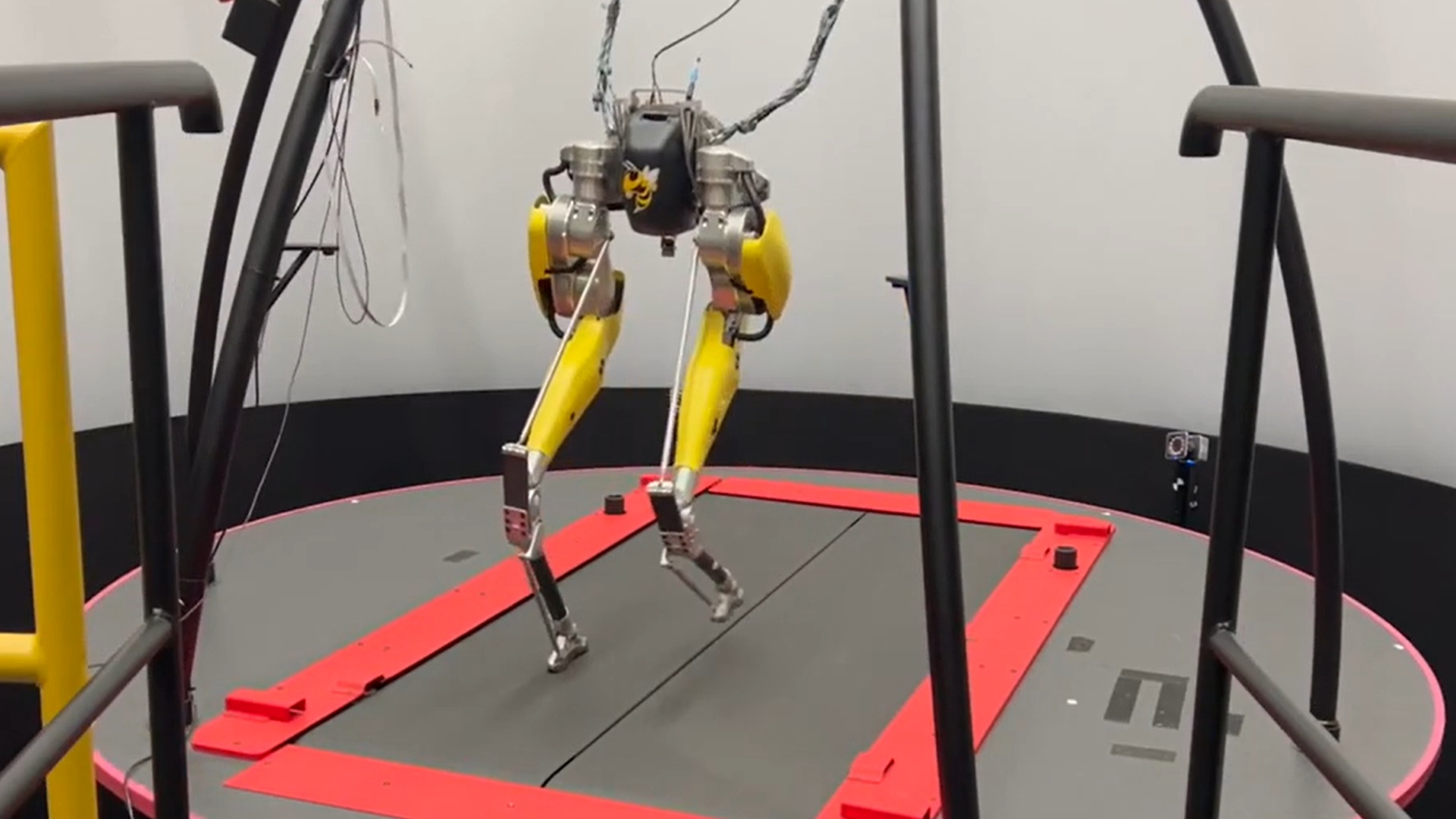
• Video: New control system makes bipedal robots 81% more stable on uneven ground New control framework helps Cassie robot recover from sudden pushes and moving terrain with 81% better stability. • Humanoid robots are getting better at catching themselves before they fall. • Researchers at Georgia Tech have developed a real-time planning and control framework that significantly improves how two-legged robots recover from sudden disturbances while walking on uneven or moving terrain. • The system allows a bipedal robot to detect instability early and adjust its next steps before a fall happens. • Instead of relying on fixed movement patterns, the robot continuously evaluates whether its current motion plan will keep it stable. • If not, it updates its next moves in real time.
Article Summaries:
- Georgia Tech researchers have introduced a real‑time planning and control framework that boosts the stability of the bipedal robot Cassie by 81 % on uneven or moving terrain. The system blends formal logic rules with model‑predictive control, enabling the robot to detect instability early and replan its next steps before a fall. Tests on the CAREN programmable treadmill, including sudden directional shifts and physical jolts from a BumpEm device, showed faster decision‑making, improved collision avoidance, and more confident stepping. While performance drops on steep downhill slopes, the work is positioned as a foundational step toward deploying humanoid robots in unpredictable real‑world settings.
Sources: