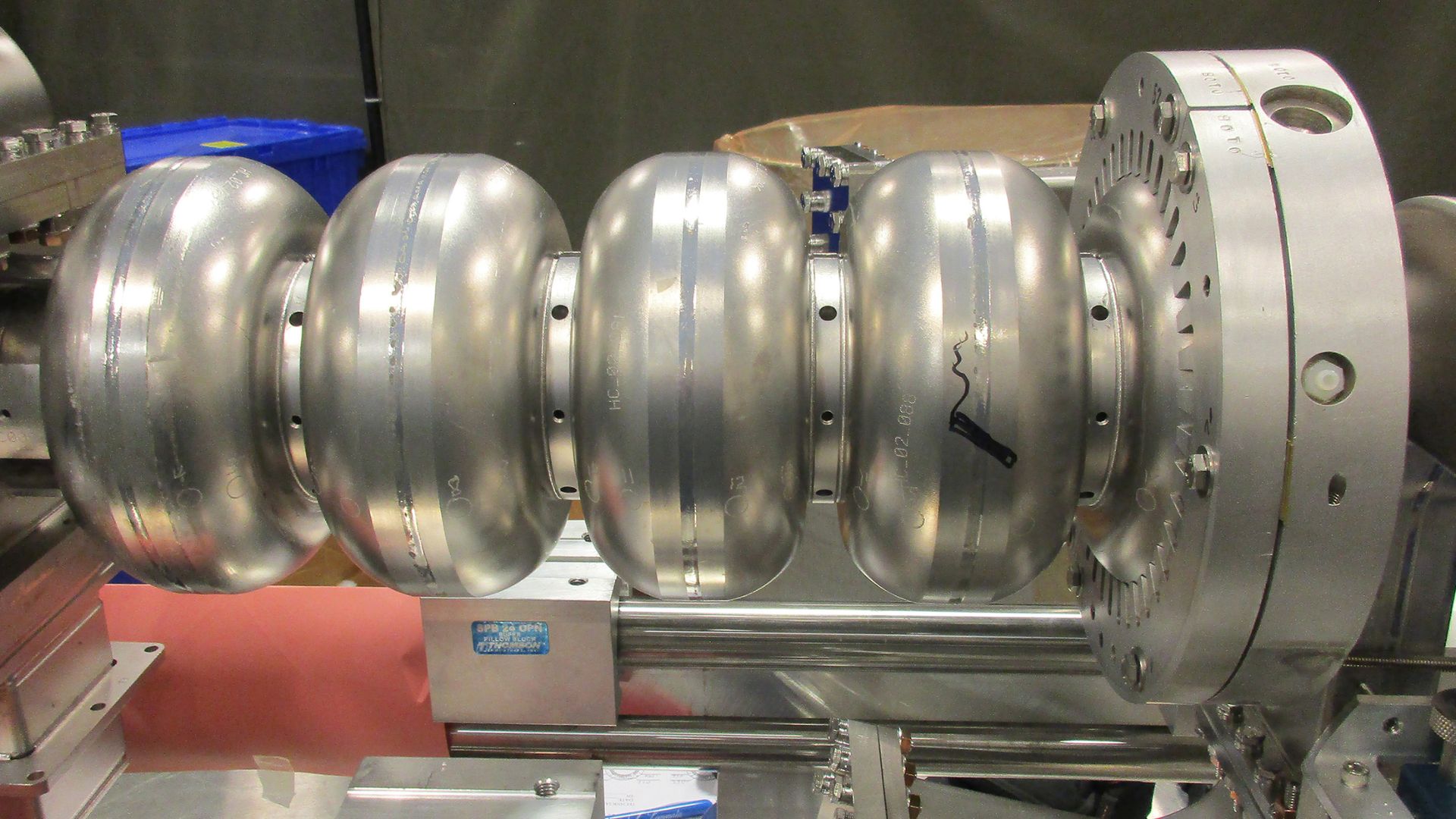
• US particle accelerators turn nuclear waste into electricity, cut radioactive life by 99.7% The system uses a particle accelerator to fire high-energy protons at a target, such as liquid mercury, to trigger spallation. • Researchers at the DOE’s Thomas Jefferson National Accelerator Facility are advancing two high-stakes projects aimed at optimizing Accelerator-Driven Systems (ADS). • The initiative focuses on a dual-purpose breakthrough: generating additional carbon-free electricity from spent nuclear fuel while drastically reducing its radioactive lifespan. • The projects are supported by $8.17 million in grants from the Department of Energy’s NEWTON (Nuclear Energy Waste Transmutation Optimized Now) program and represent a shift from treating used nuclear fuel as a permanent liability to viewing it as a recyclable fuel source. • The researchers are developing ADS technology. • This system uses a particle accelerator to fire high-energy protons at a target (such as liquid mercury), triggering a process called “spallation.” This releases a flood of neutrons that interact with unwanted, long-lived isotopes in nuclear waste.
Article Summaries:
- Researchers at the DOE’s Thomas Jefferson National Accelerator Facility are advancing Accelerator‑Driven Systems (ADS) that use high‑energy protons to spallate a target (e.g., liquid mercury), producing neutrons that transmute long‑lived isotopes in spent nuclear fuel. The technology could cut the waste’s radioactive lifespan from ~100,000 years to about 300 years while generating additional carbon‑free electricity from the heat produced. Jefferson Lab is addressing two key hurdles: improving accelerator efficiency with niobium‑tin cavities that allow higher operating temperatures, and developing high‑power magnetrons to supply the required 10 MW beam. The projects, funded with $8.17 million from the DOE’s NEWTON program, aim to recycle the U.S. nuclear fuel stockpile within 30 years.
Sources: