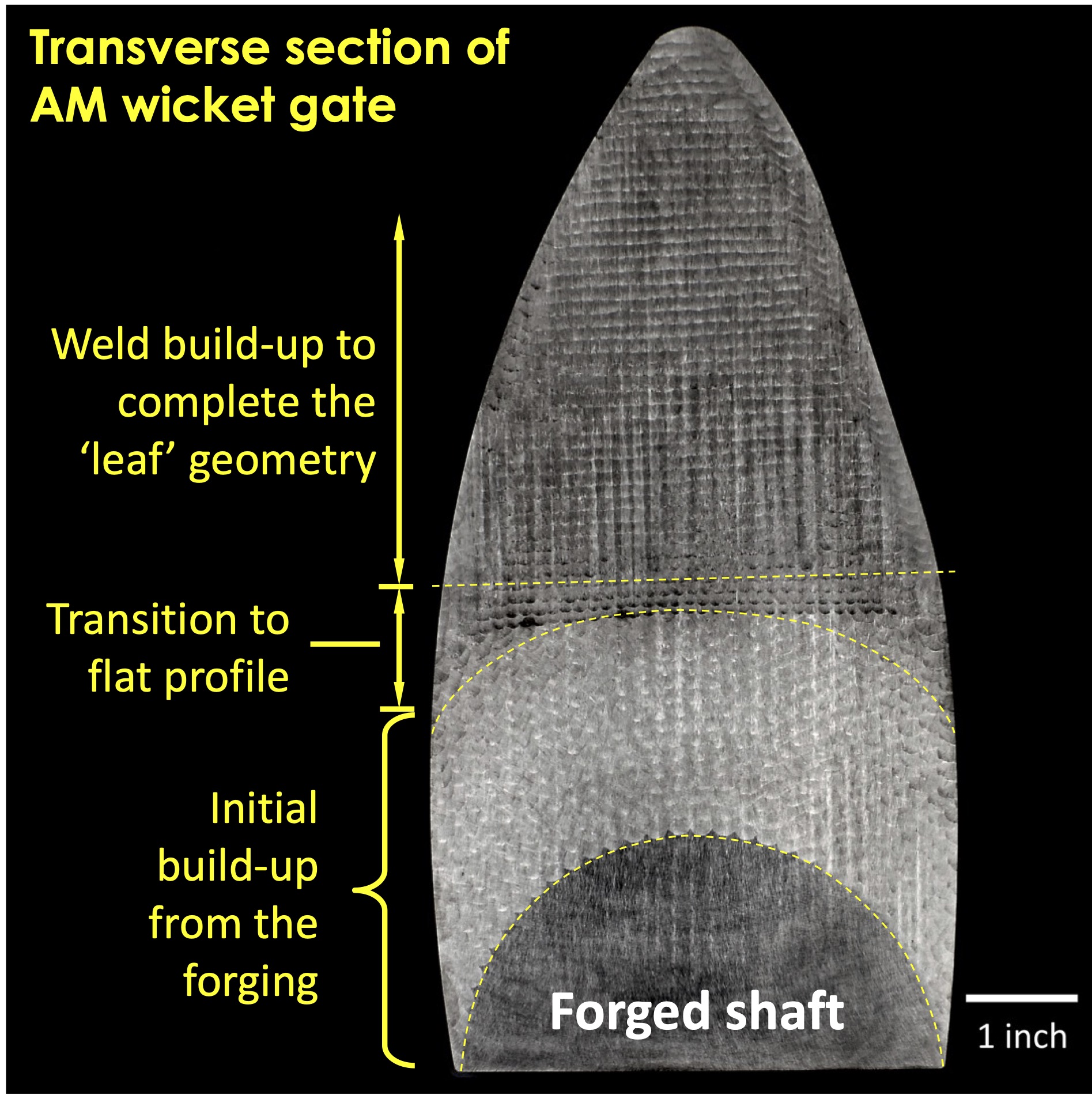
• Hydropower fleet over 2,200 plants, 65 years old, relies on large bespoke parts hard to source. • Supply chain strains: long lead times, disappearing suppliers, aging infrastructure threaten reliability. • EPRI pioneers convergent manufacturing, blending conventional metal stock with 3D printed features. • RD&D project with SRP and LEAS produced a hydropower wicket gate via wire‑arc DED. • Wire‑arc DED enables large‑area additive parts, cutting schedules and meeting stringent utility standards. • EPRI’s AM3 program tackles barriers-experience, codes, qualification-to accelerate adoption.
Article Summaries:
- EPRI, Salt River Project (SRP) and Lincoln Electric Additive Solutions (LEAS) completed a first‑of‑its‑kind demonstration of convergent manufacturing for a hydropower wicket gate. Using wire‑arc directed energy deposition (DED), the team printed a CF3M stainless‑steel “leaf” onto a forged 316L bar, cutting wire use by about 50 % and simplifying handling. The project met stringent utility standards through extensive inspection-including penetrant, radiography, ultrasonic testing, and mechanical testing-showing that large‑area DED can deliver high‑quality, economically viable big parts for aging hydropower infrastructure. The success paves the way for broader adoption of additive manufacturing in the energy sector.
Sources: