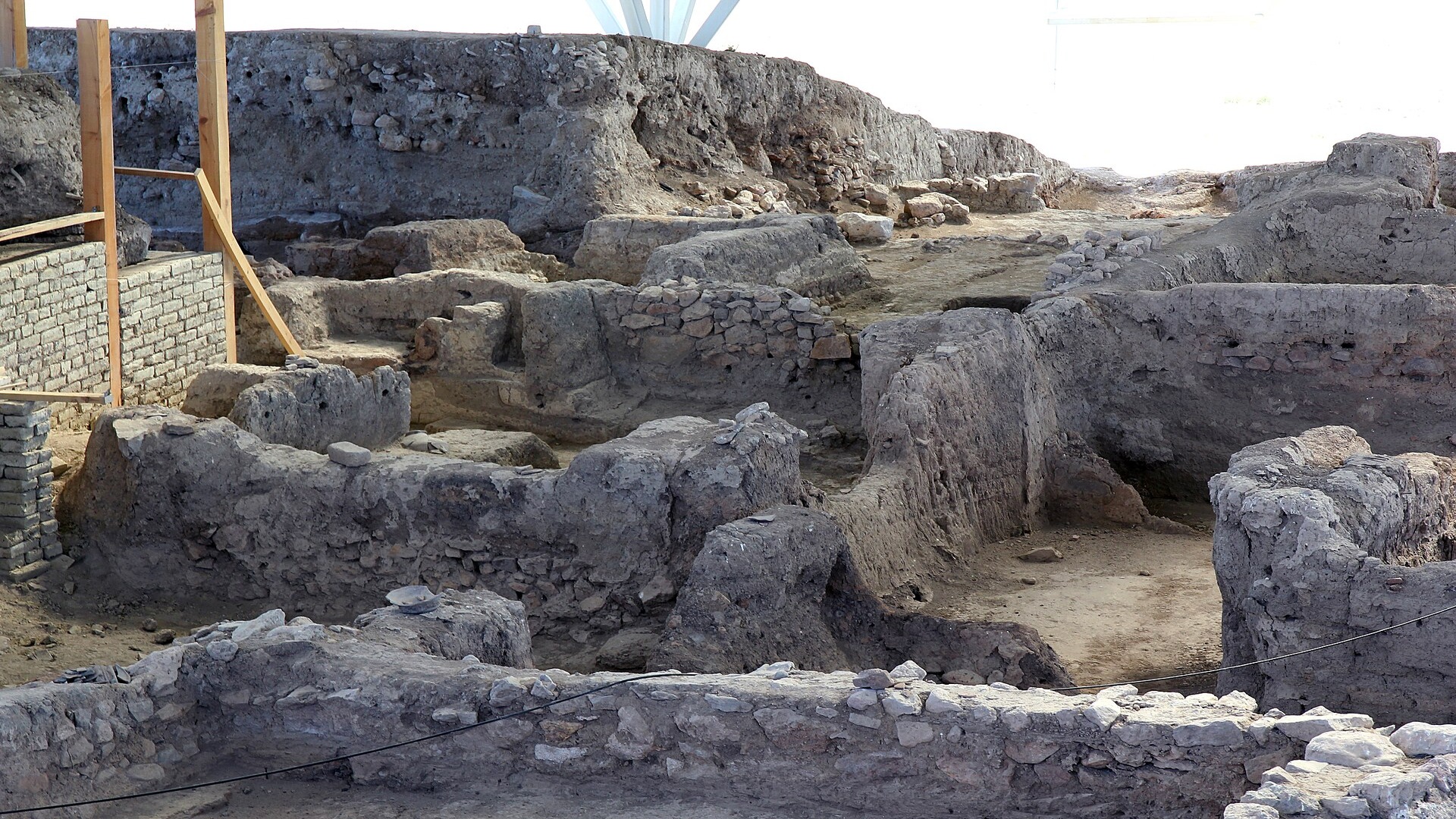
• Two 4,000-year-old burnt fabrics reveal a lost Bronze Age textile industry A deep dive into the microscopic analysis of Tx1 and Tx2 fragments. • Excavations in Turkey have yielded two very small but very important pieces of fabric: the earliest evidence of a single-needle knitting technique known as nålbinding and of an indigo-dyed textile ever found in Bronze Age Anatolia. • Cuneiform tablets suggest the textile industry was highly sophisticated during the Bronze Age, the Old Assyrian Colony Period, and the Hittite Empire; however, physical traces rarely survive, as per a study. • However, miraculously, in 2016 and 2018, 4,000-year-old burnt textile fragments were discovered in Beycesultan Höyük, an ancient settlement in western Anatolia, providing archaeologists with an extremely rare window into this once thriving industry that all but disappeared. • Finally, evidence of famous Turkish textile industry? • Archaeologists uncovered two burnt textiles inside Middle and Late Bronze Age structures that remain mysterious, whether they comprise a single building or a larger complex.
Article Summaries:
- Archaeologists in western Turkey have uncovered two 4,000‑year‑old burnt textile fragments at Beycesultan Höyük, providing the earliest physical evidence of a sophisticated Bronze Age textile industry in Anatolia. Radiocarbon dates place the pieces between 1915‑1595 BCE. Microscopic analysis shows one fragment (Tx1) was made from hemp using single‑needle knitting (nålbinding) and dyed with indigo, the first such example in the region. The second fragment (Tx2) displays a plain tabby weave produced on a weighted loom. Both textiles were found in rooms containing loom‑related tools, suggesting a workshop and large‑scale production at the site.
Sources: