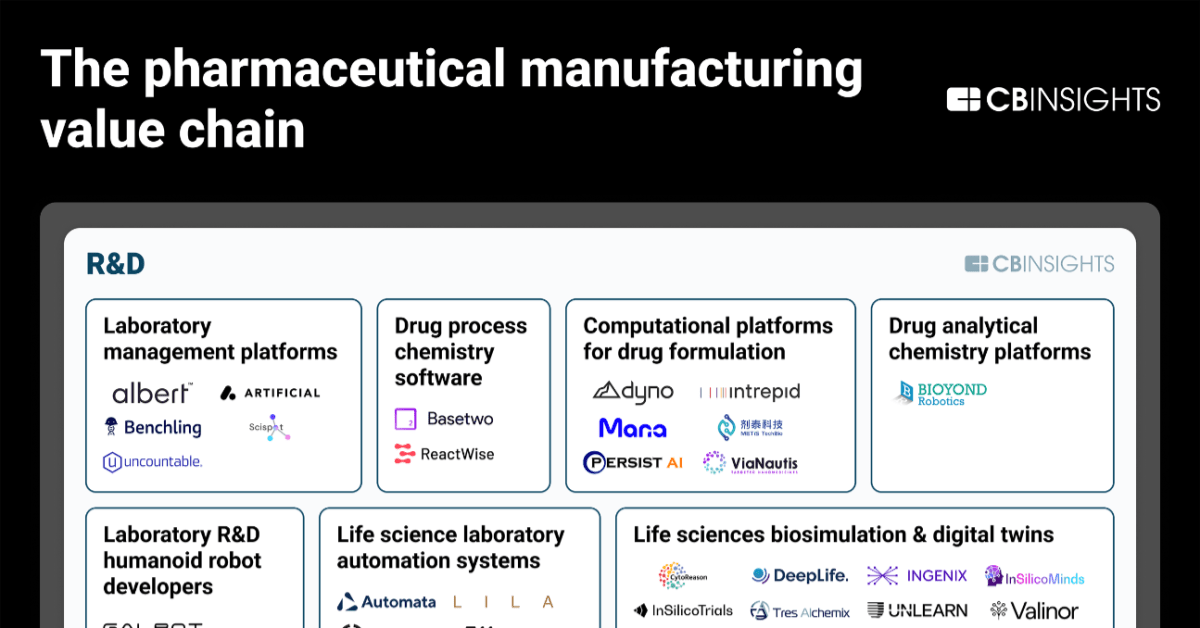
• Autonomous and adaptive systems are impacting every level of the pharmaceutical manufacturing value chain. • Across R&D, production, quality control, and logistics, a new set of technologies fromlaboratory humanoid robotstoAI-enhanced digital twinsare unlocking new capabilities. • This dynamic is intensifying: pharma committed over $400B to new manufacturing facilities in 2025, creating greenfield sites where digital technologies can be embedded from design. • Alongside this capital wave, new FDA guidance is reducing regulatory uncertainty around AI, fueling an arms race among incumbents and creating partnership opportunities for differentiated startups. • As therapies become more complex and personalized, companies that master integrating traditional production technologies with emerging automation, AI, and digital platforms will be best positioned to scale and deploy next-generation treatments ahead of competitors. • Get the world’s best tech research in your inboxBillionaires, CEOs, & leading investors all love the CB Insights newsletter Get the world’s best tech research in your inbox Billionaires, CEOs, & leading investors all love the CB Insights newsletter In this market map, we identified 91 of the most promising private companies enabling new capabilities across the pharmaceutical manufacturing value chain.
Article Summaries:
- The latest market map charts 91 high‑potential private firms reshaping the pharmaceutical manufacturing value chain, identified by Mosaic scores above 500 and founded after 2010. These companies span R&D, production, quality control, and logistics, offering technologies from laboratory humanoid robots to AI‑enhanced digital twins that integrate traditional manufacturing with emerging automation. The sector is accelerating as pharma commits over $400 B to new greenfield facilities in 2025, embedding digital tools from the design stage. New FDA guidance on AI reduces regulatory uncertainty, sparking an arms race among incumbents and opening partnership opportunities for differentiated startups. Firms that master this integration are poised to scale next‑generation therapies ahead of competitors.
Sources: