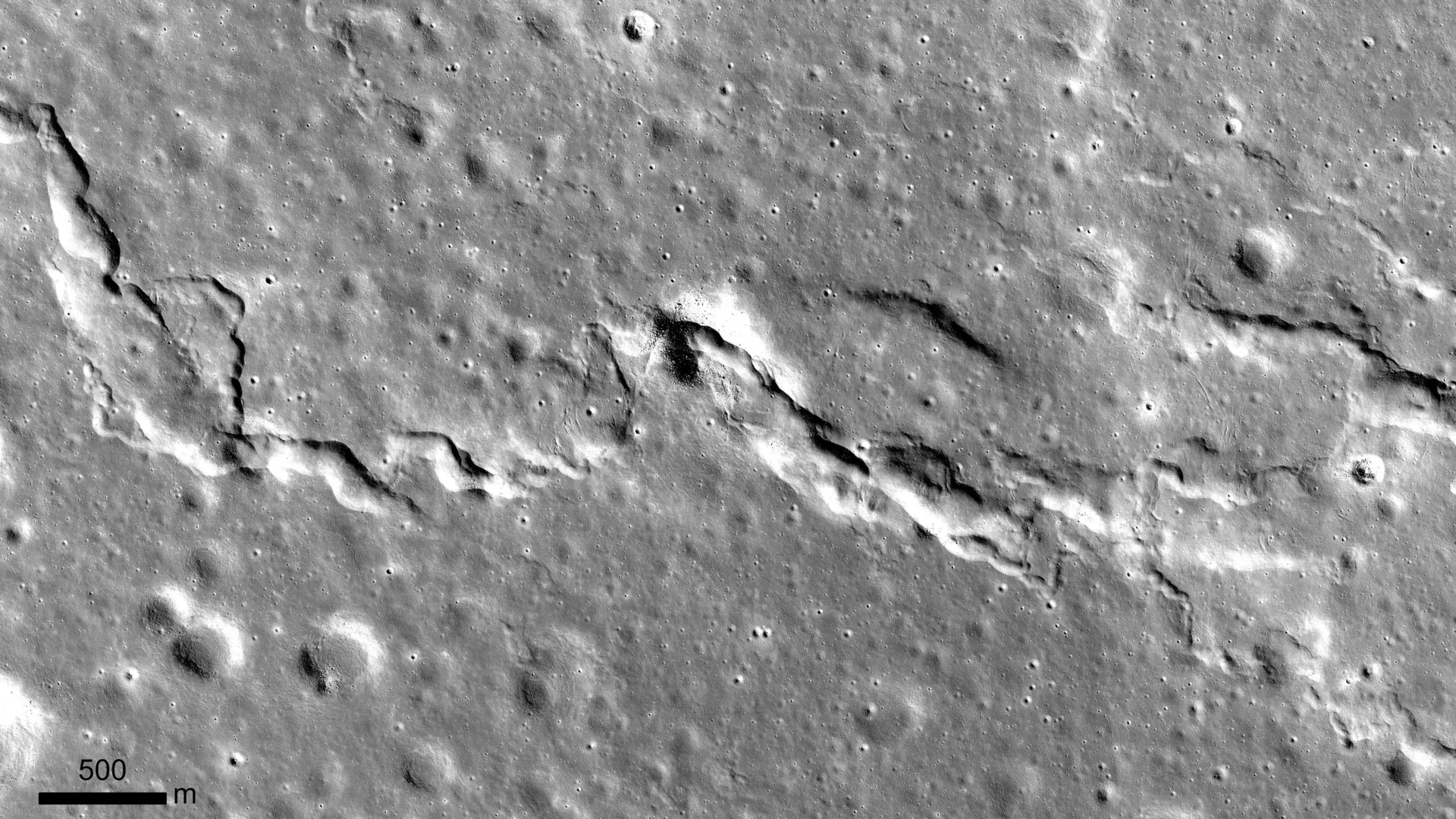
• Scientists map small mare ridges (SMRs), revealing active tectonic features across lunar maria. • SMRs are young, widespread, and indicate recent Moon contraction and stress buildup. • The Moon’s single crust contracts as interior cools, creating compressional forces. • Unlike Earth’s plate tectonics, lunar quakes arise from crustal stress, not plate boundaries. • New quake hotspots identified, guiding safer landing sites for future lunar missions. • Findings published in The Planetary Science Journal by National Air and Space Museum researchers.
Article Summaries:
- Scientists have mapped over a thousand small mare ridges (SMRs) across the Moon’s dark plains, revealing that the lunar surface is still contracting. Published in The Planetary Science Journal, the study shows these young ridges form from the same compressional forces that created the high‑land lobate scarps, indicating ongoing tectonic activity. Because SMRs are linked to past moonquakes, their widespread distribution points to new seismic hotspots that could affect future lunar landing sites. The findings, led by researchers at the Smithsonian’s National Air and Space Museum, deepen understanding of the Moon’s interior cooling and its potential for future seismic events.
Sources: