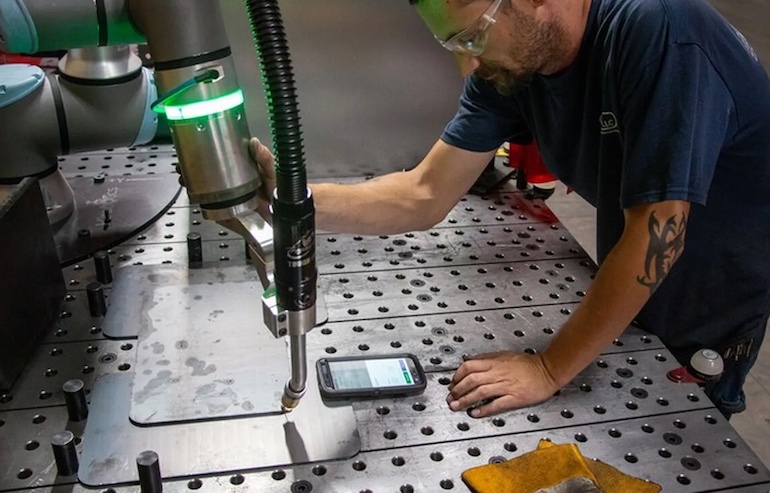
• Force- and power-limited robots such as those from UR enable humans to work alongside robots for tasks like welding. • Source: Universal Robots The promise of collaborative robots, or cobots, is a seamless partnership between humans and machines. • However, for this partnership to succeed, employees must feel completely safe. • Without a foundation of safety, employee buy-in falters, and the potential productivity gains of cobot technology are never fully realized. • The key to unlocking this potential lies in the thoughtful design of cobot workspaces. • Safe and effective environments allow facility leaders to protect their workforce while reaping the full benefits of human-robot collaboration.
Article Summaries:
- Collaborative robots (cobots) promise seamless human‑machine partnership, but their success hinges on employee safety. The article stresses that without a secure foundation, workforce acceptance and productivity gains falter. It outlines cobot use cases-transport, picking, vision‑based inspection, and safety monitoring-and notes their growing versatility. To design safe workspaces, facilities must follow ANSI/RIA R15.06, ISO 10218, and OSHA guidelines, conduct thorough risk assessments, and implement multi‑layered safety systems, including light curtains, safety mats, and arc‑flash mitigation. Additionally, intuitive human‑robot interfaces and proper training are essential to prevent misuse and ensure a positive return on investment.
- Summary
The article outlines how collaborative robots (cobots) can enhance productivity only when workplaces are designed with safety as a priority. Cobots-force‑limited machines that share human workspaces-are used for tasks such as inventory transport, pick‑and‑place, quality inspection, and worker monitoring. To ensure employee confidence, facilities must conduct thorough risk assessments, adopt multi‑layered safety systems (light curtains, safety mats, scanners), and address electrical hazards like arc flashes. Compliance with ANSI/RIA R15.06, ISO 10218, and OSHA rules is essential, and effective human‑robot interfaces coupled with proper training help prevent misuse and accidents.
Sources: