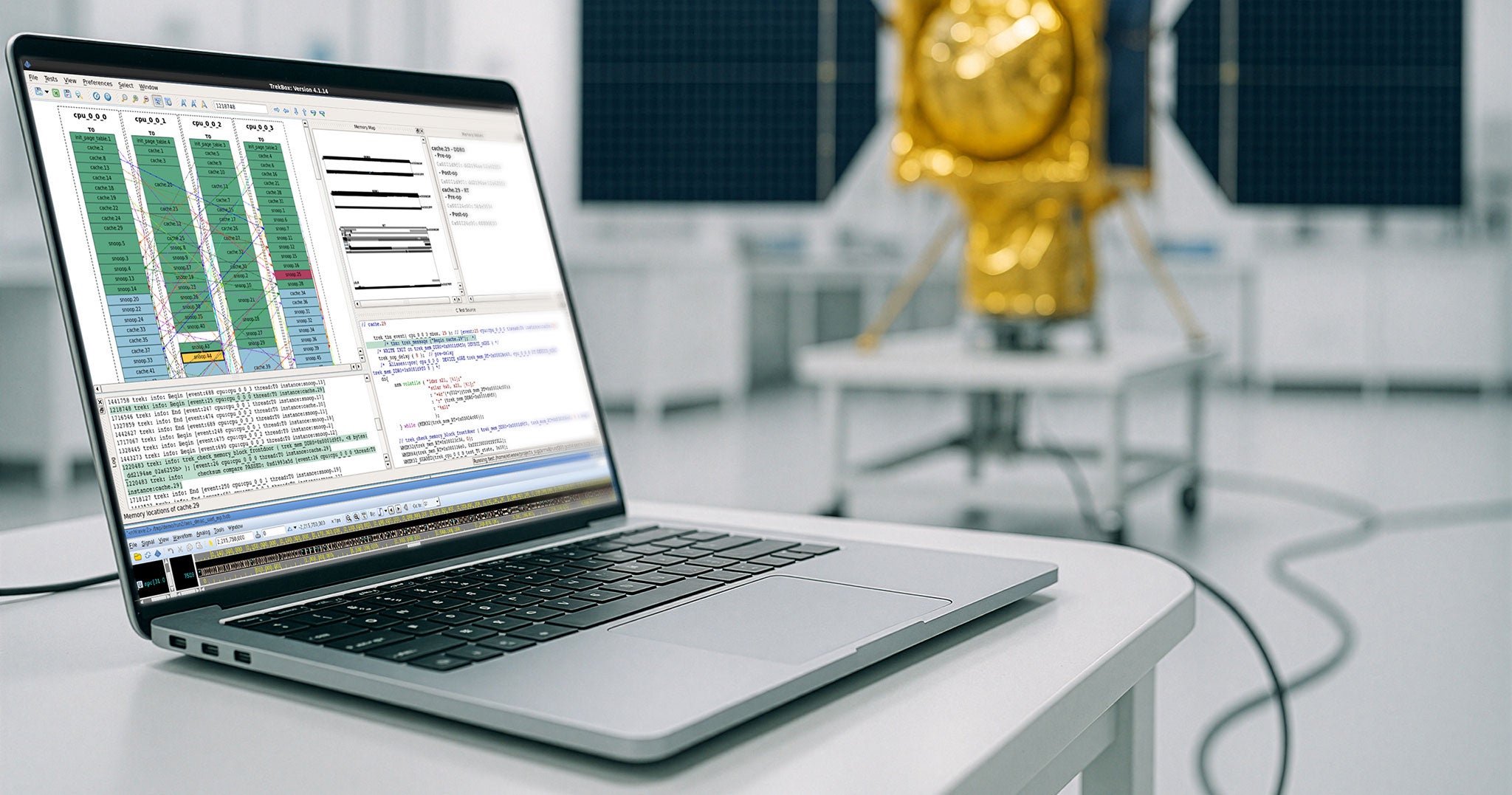
• It’s been an interesting few weeks for anyone studying how cosmic radiation and solar activity affect safety-critical electronics. • We saw Airbus order the grounding of around 6,000 A320-family aircraft worldwide (with around 900 aircraft requiring fortifying hardware upgrades) after investigators concluded that intense solar radiation could corrupt critical control data mid-flight. • And NASA’s Perseverance rover captured the sound of ‘mini-lightning’ crackling on Mars for the first time. • These static-like discharges, generated by colliding dust grains, were evidenced via electromagnetic interference picked up by the rover’s microphone. • This kind of cosmic radiation and electromagnetic interference (EMI) can disrupt sensitive electronics and instrumentation by flipping bits in a semiconductor’s registers, flip‑flops and memories. • Such single‑event upsets can corrupt the processor’s internal state in ways that are hard to predict and potentially catastrophic to its operation.
Article Summaries:
- Breker has begun a comprehensive verification program for Frontgrade Gaisler’s NOEL‑V fault‑tolerant RISC‑V core, aimed at space‑grade applications. Recent incidents-Airbus grounding 6,000 A320 aircraft due to solar‑radiation‑induced data corruption and NASA’s Perseverance rover recording “mini‑lightning” dust discharges-highlight the growing threat of cosmic radiation and EMI to mission‑critical electronics. In space, verification must prove resilience to extreme temperature swings, launch vibration, and ionizing radiation, extending beyond functional correctness to ongoing robustness across successive revisions. Breker’s work underscores the need for evolving, rigorous test suites to ensure that space‑deployed processors can withstand hostile environments.
Sources: