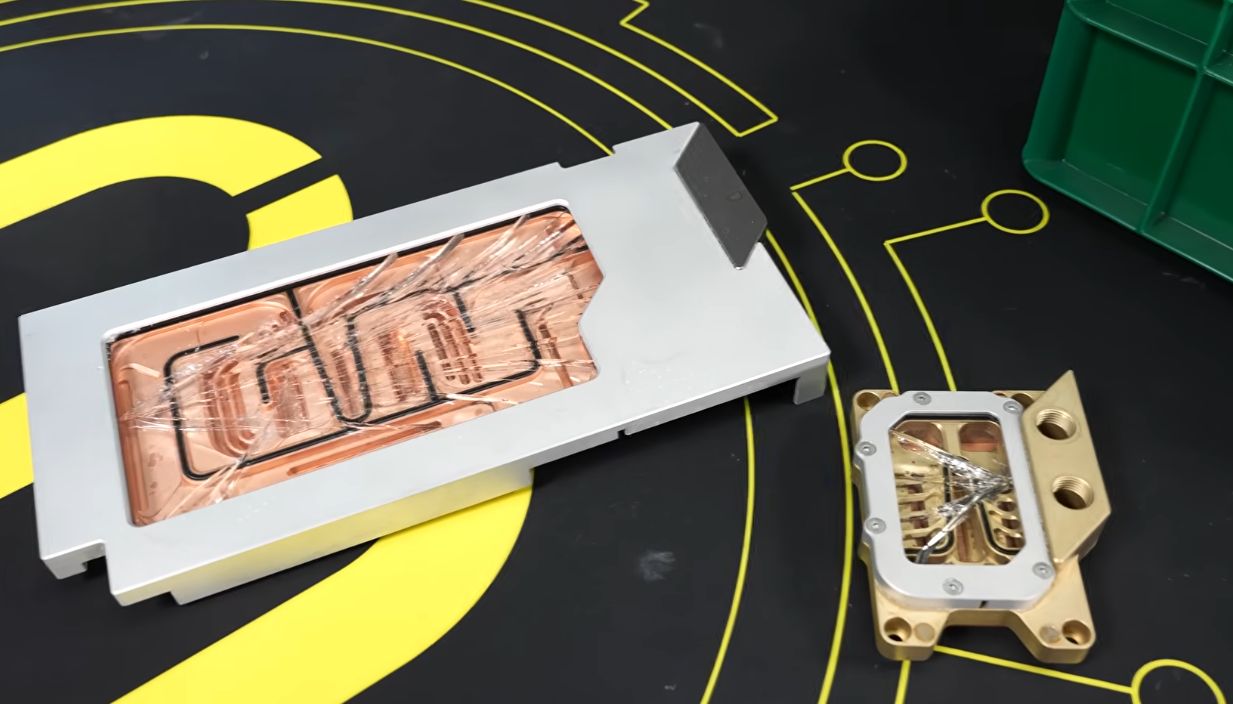
• Many people who use water cooling in their computer systems like to go full-bore with ‘aquarium’ aesthetic, which includes adding a window to their cooling blocks so that they see the water flowing through the window from behind the case’s window. • Traditionally PMMA acrylic is used for these windows, as it’s quite durable and easy to handle. • Using glass offers some advantages over acrylic, but has its own disadvantages, most of all that it’s hard to process, but also that it’s known for shattering quite easily if pushed beyond its limits. • This is why [der8auer] as a manufacturer of such water blocks has now spent a few years investigating the viability of using glass for this purpose. • First and foremost is safety, with an early prototype glass water block suddenly shattering without clear cause. • Although normally the water cooling loop is only expected to experience pressures of about 600 mbar, the new glass windows that are now entering mass-production had to be tested to their breaking point.
Article Summaries:
- Many people who use water cooling in their computer systems like to go full-bore with ‘aquarium’ aesthetic, which includes adding a window to their cooling blocks so that they see the water flowing through the window from behind the case’s window. Traditionally PMMA acrylic is used for these windows, as it’s quite durable and easy to handle. Using glass offers some advantages over acrylic, but has its own disadvantages, most of all that it’s hard to process, but also that it’s known for shattering quite easily if pushed beyond its limits. This is why [der8auer] as a manufacturer of such water
Sources: