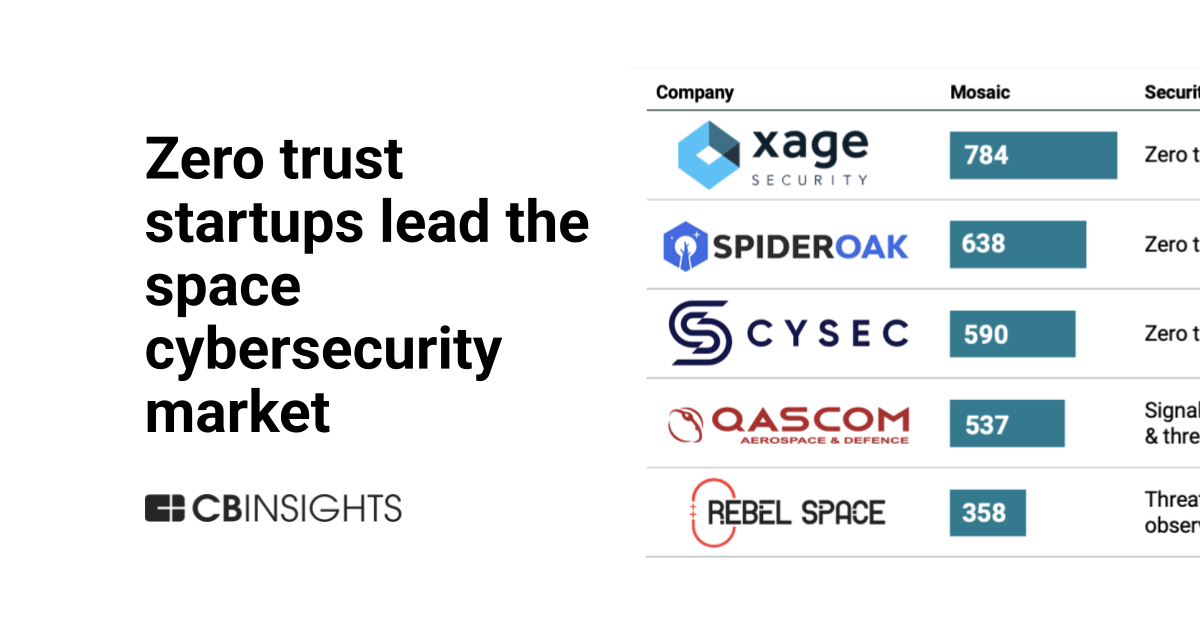
• Space infrastructure is evolving from exclusive government and military operations into critical commercial applications - includingnavigation systems,satellite internet, andgeospatial intelligence platforms. • The satellite market is projected to grow7x over the next decade. • Space cybersecurityis now a necessary defense, protecting satellites, ground stations, and mission operations from cyberattacks throughout their lifecycles. • The threat is intensifying aslarge satellite constellationsexpand the attack surface andquantum computingshows potential to break current encryption standards. • Get the world’s best tech research in your inboxBillionaires, CEOs, & leading investors all love the CB Insights newsletter Get the world’s best tech research in your inbox Billionaires, CEOs, & leading investors all love the CB Insights newsletter The competitive landscape is shifting in response. • Defense leaders likeRTXandGeneral Dynamics- which make up over half of the market - now face specialized startups likeXage SecurityandSpiderOak, as players race to secure a domain where a single breach could compromise critical infrastructure.
Article Summaries:
- Space infrastructure is shifting from a government‑only domain to a commercial one, with satellite navigation, internet, and geospatial intelligence expected to grow sevenfold in the next decade. This expansion increases the attack surface for cyber threats, especially as large constellations proliferate and quantum computing threatens existing encryption. Consequently, protecting satellites, ground stations, and mission operations has become a critical defense priority. Established defense firms such as RTX and General Dynamics, which dominate the market, now compete with niche startups like Xage Security and SpiderOak that specialize in space‑specific cybersecurity solutions. The race to secure this emerging frontier underscores the potential impact of a single breach on national and commercial infrastructure.
Sources: