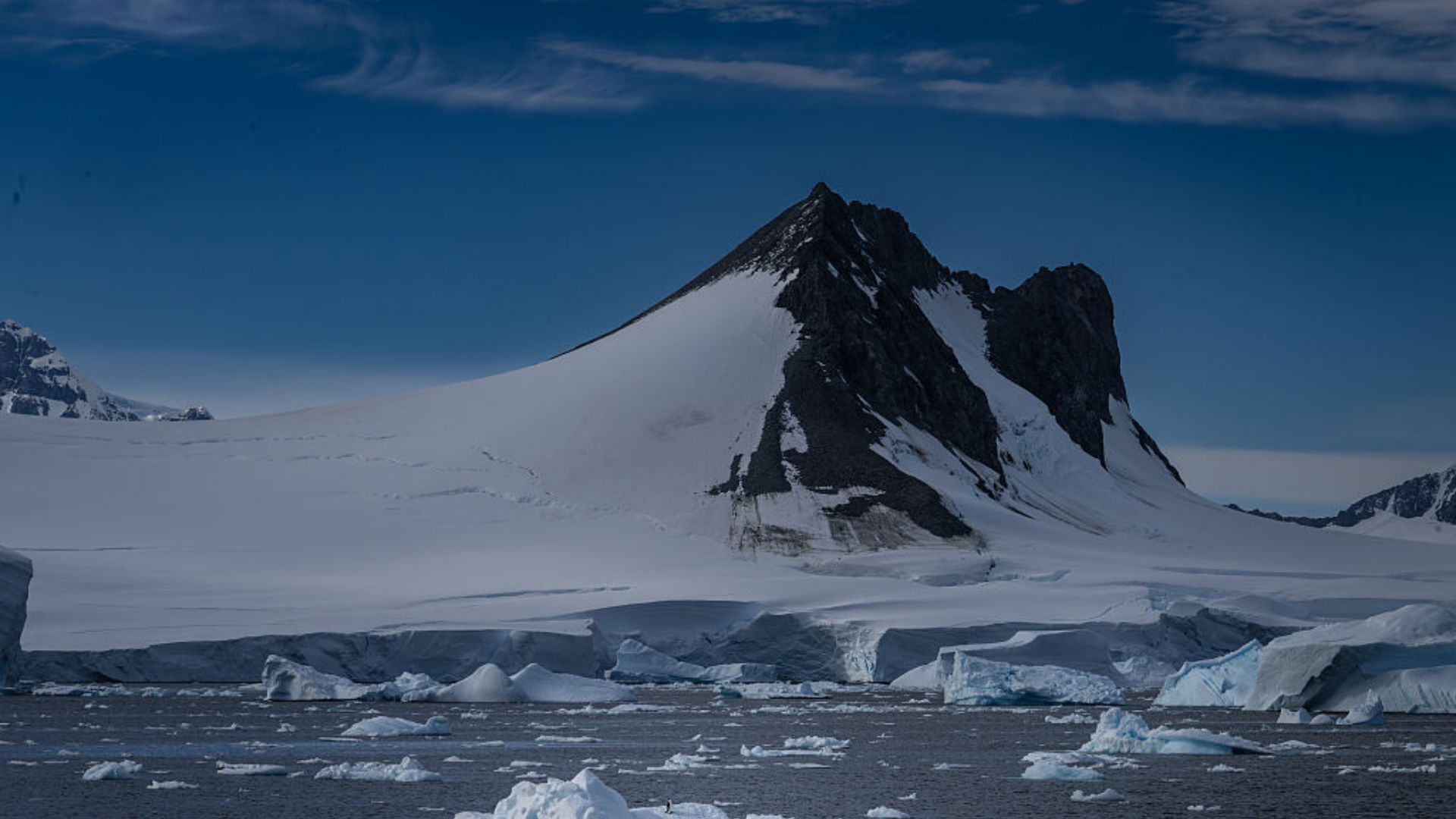
• Scientists tie Antarctica’s ‘gravity hole’ to deep rock shifts 50 million years ago Computer models of shifting rocks show that this gravity hole has grown stronger between 50 and 30 million years ago. • We treat gravity as a firm law, but the ground beneath Antarctica tells a different story - one where the planet’s internal churn is actively weakening its grip. • A new study led by the University of Florida has revealed that one of the planet’s most significant “gravity holes” sits directly beneath Antarctica. • Also known as the Antarctic Geoid Low (AGL), it has evolved over the last 70 million years and may have shaped Earth’s global climate. • Computer models of shifting rocks show that this gravity hole has grown stronger between 50 and 30 million years ago, coinciding with the widespread glaciation that covered Antarctica. • “If we can better understand how Earth’s interior shapes gravity and sea levels, we gain insight into factors that may matter for the growth and stability of large ice sheets,” said Alessandro Forte, Ph.D., a professor of geophysics at the University of Florida and co-author of the new study.
Article Summaries:
- Scientists tie Antarctica’s ‘gravity hole’ to deep rock shifts 50 million years ago Computer models of shifting rocks show that this gravity hole has grown stronger between 50 and 30 million years ago. We treat gravity as a firm law, but the ground beneath Antarctica tells a different story - one where the planet’s internal churn is actively weakening its grip. A new study led by the University of Florida has revealed that one of the planet’s most significant “gravity holes” sits directly beneath Antarctica. Also known as the Antarctic Geoid Low (AGL), it has evolved over the last 70 million y
Sources: