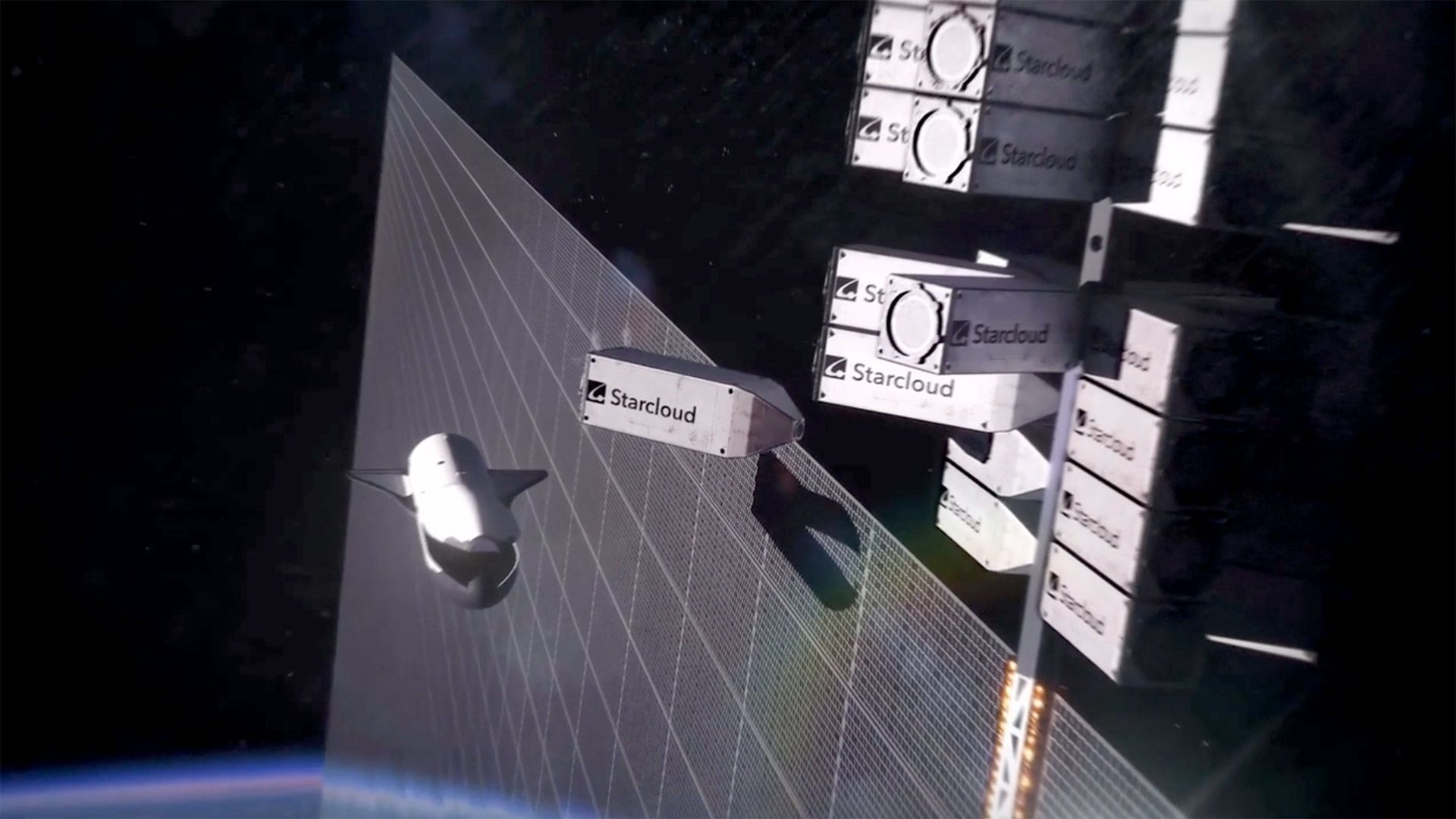
• Copy link Facebook X Whatsapp Reddit Pinterest Flipboard Email Get Tom’s Hardware’s best news and in-depth reviews, straight to your inbox. • You are now subscribed Your newsletter sign-up was successful Numerous visionaries, including Elon Musk and Jeff Bezos, are thinking about putting AI data centers into orbit to tap into unlimited amounts of power, fewer physical constraints, and the lack of regulations. • But while the idea may be worthy in the long-term future, it is “ridiculous” for now, believes Sam Altman, chief executive and co-founder of OpenAI. • Photonics and high-speed data movement is the next big AI bottleneck The data center cooling state of play Massive AI data center buildouts are squeezing energy supplies Ultra Ethernet: The data center interconnection of tomorrow “I honestly think the idea with the current landscape of putting data centers in space is ridiculous,” said Sam Altman at a press conference hosted byThe Indian Express. • “It will make sense someday, but if you just do the very rough math of launch costs relative to the cost of power we can do on Earth, to say nothing of how you are going to fix a broken GPU in space, and they do break a lot still, unfortunately. • We are not there yet.” Indeed, it costs $5.6 million to launch 1,764 pound (800kg) intolow Earth orbit(LEO) using a SpaceX rocket, though for those who plan to launch tens of tons, the price per kilogram will probably come down.
Article Summaries:
- Sam Altman, CEO of OpenAI, dismissed Elon Musk’s proposal to build AI data centers in orbit as “ridiculous” for the present, citing high launch costs, frequent hardware failures, and the lack of radiation‑hardened components. At a press conference hosted by The Indian Express, Altman noted that a SpaceX launch costs $5.6 million for 800 kg, while a single Nvidia rack‑scale accelerator weighs 1,360-1,472 kg and requires extensive cooling, power, and connectivity infrastructure that is not yet space‑ready. He added that while orbital data centers may become viable in the long term, they are unlikely to scale within this decade.
Sources: