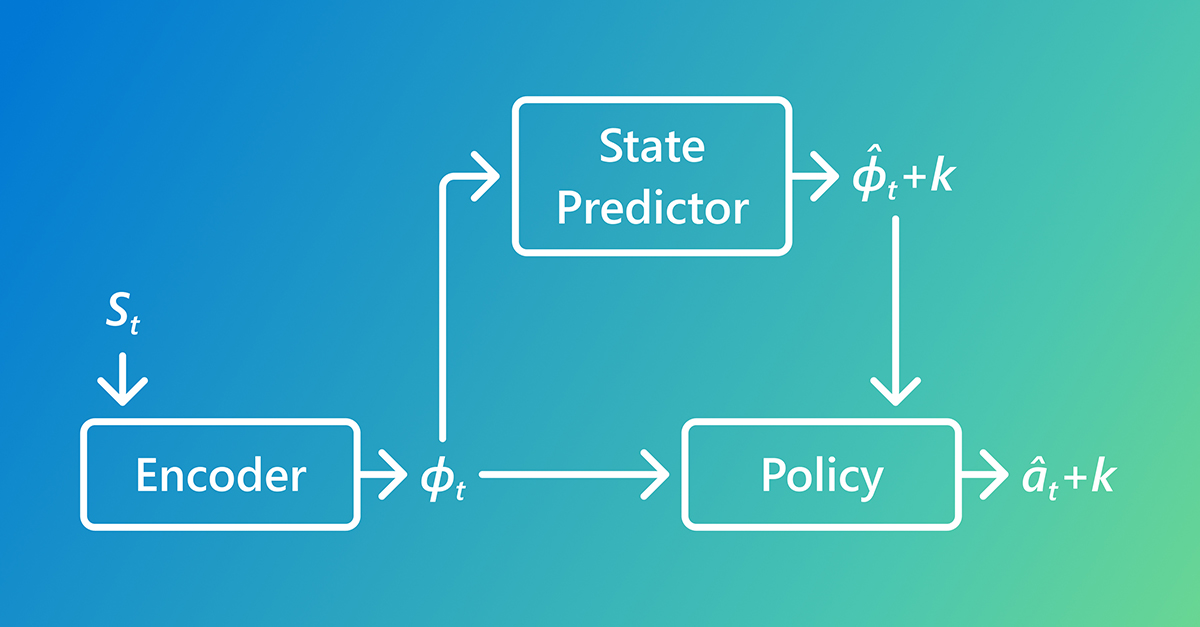
• At a glance Imitation learning becomes easier when an AI agent understands why an action is taken. • Predictive Inverse Dynamics Models (PIDMs) predict plausible future states, clarifying the direction of behavior during imitation learning. • Even imperfect predictions reduce ambiguity, making it clearer which action makes sense in the moment. • This makes PIDMs far more data‑efficient than traditional approaches. • Imitation learning teaches AI agents by example: show the agent recordings of how people perform a task and let it infer what to do. • The most common approach, Behavior Cloning (BC), frames this as a simple question: “Given the current state of the environment, what action would an expert take?” In practice, this is done through supervised learning, where the states serve as inputs and expert actions as outputs.
Article Summaries:
- Rethinking Imitation Learning with Predictive Inverse Dynamics Models
Researchers have shown that Predictive Inverse Dynamics Models (PIDMs) can learn from far fewer demonstrations than traditional Behavior Cloning (BC). PIDMs first forecast plausible future states and then infer the action needed to reach that state, providing a clearer sense of intent and reducing ambiguity. This two‑stage approach makes action prediction more data‑efficient, achieving comparable performance with as little as one‑fifth of the demonstrations required by BC. The method was validated in a realistic 3D video‑game setting, where agents processed raw video input and chose actions in real time, demonstrating its practical viability.
Sources: