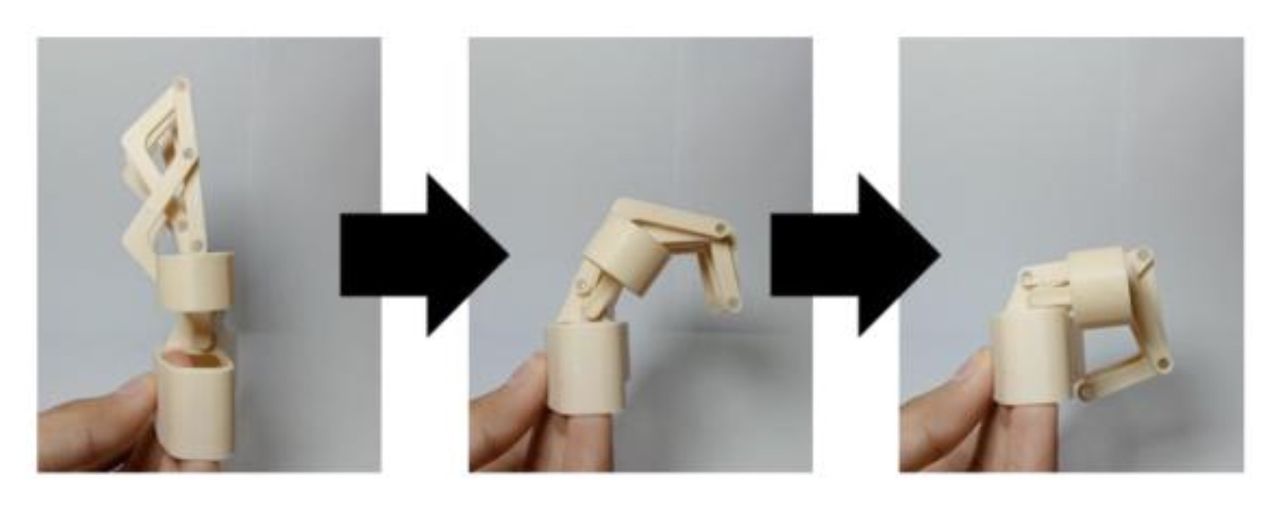
• A new paper details a low-cost, body powered 3D printed finger prosthesis for trans-phalangeal amputees, signaling fresh momentum for practical, customizable partial-digit solutions. • Most readers know the 3D printed prosthetics story through community projects and clinic collaborations that deliver wrist-driven hands and cosmetic covers. • Partial finger loss, however, is a different design space. • There is less room for linkages, higher demand for comfort under shear, and a constant trade-off between cosmetic shape and functional leverage. • Commercial devices exist, but custom fabrication often drives up cost and lead time. • That is why a focused, body powered finger design matters.
Article Summaries:
- Researchers have developed a low‑cost, body‑powered 3D‑printed finger prosthesis for trans‑phalangeal amputees. The design uses cable‑driven linkages and elastic returns instead of motors or batteries, allowing the prosthesis to be actuated by the wearer’s own arm movements. Additive manufacturing enables rapid, patient‑specific iteration, with customized sockets, hinge geometry, and surface textures that improve comfort, durability, and appearance. The approach is attractive for clinics, makerspaces, and NGOs that lack high‑budget resources, as it requires only standard FFF printers and off‑the‑shelf components. Key challenges include polymer creep, cable wear, and maintaining hygienic skin contact.
Sources: