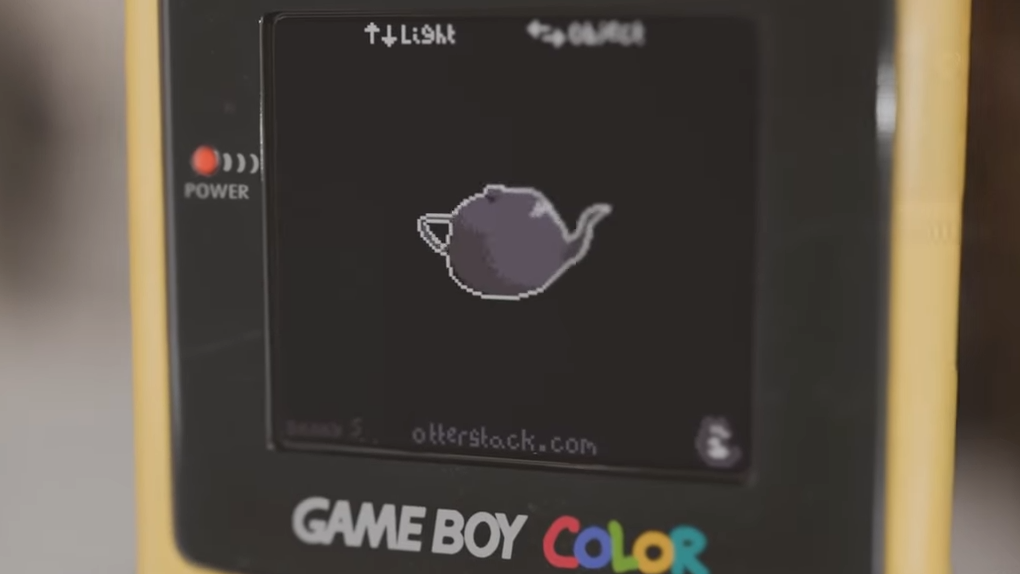
• [Danny Spencer] has a brilliant graphical demo that, like all great demos, flexes a deep understanding of the underlying system:a real-time 3D shader on the Game Boy Color. • If you’re not familiar with shaders, they were originally mathematical lighting models (hence the name) and are an integral part of the modern 3D graphics pipeline. • One no longer draws pixels directly to a screen to represent objects. • Instead, 3D object data is sent to the Graphics Processing Unit (GPU) which handles the drawing. • Shaders are what control things like an object’s lighting, textures, and more. • Implementing even a basic real-time shader in software on a Game Boy Color is pretty wild.
Article Summaries:
- Danny Spencer has released a real‑time 3D shader demo that runs on a Game Boy Color, a system traditionally limited to 2‑D sprites and lacking hardware multiply or floating‑point support. Using creative software techniques, Spencer implements a shader that lets users manipulate the position and lighting of a classic Utah teapot in real time. The demo demonstrates how the underlying mathematics can be adapted to the Game Boy’s SM83 CPU, and the full ROM is available on GitHub with an accompanying video. The project showcases the potential for advanced graphics on legacy hardware and highlights Spencer’s continued interest in pushing technical boundaries.
Sources:
- https://hackaday.com/2026/02/24/real-time-shader-running-on-a-game-boy-color/ (Latest source article published: 2026-02-24 16:30 UTC)