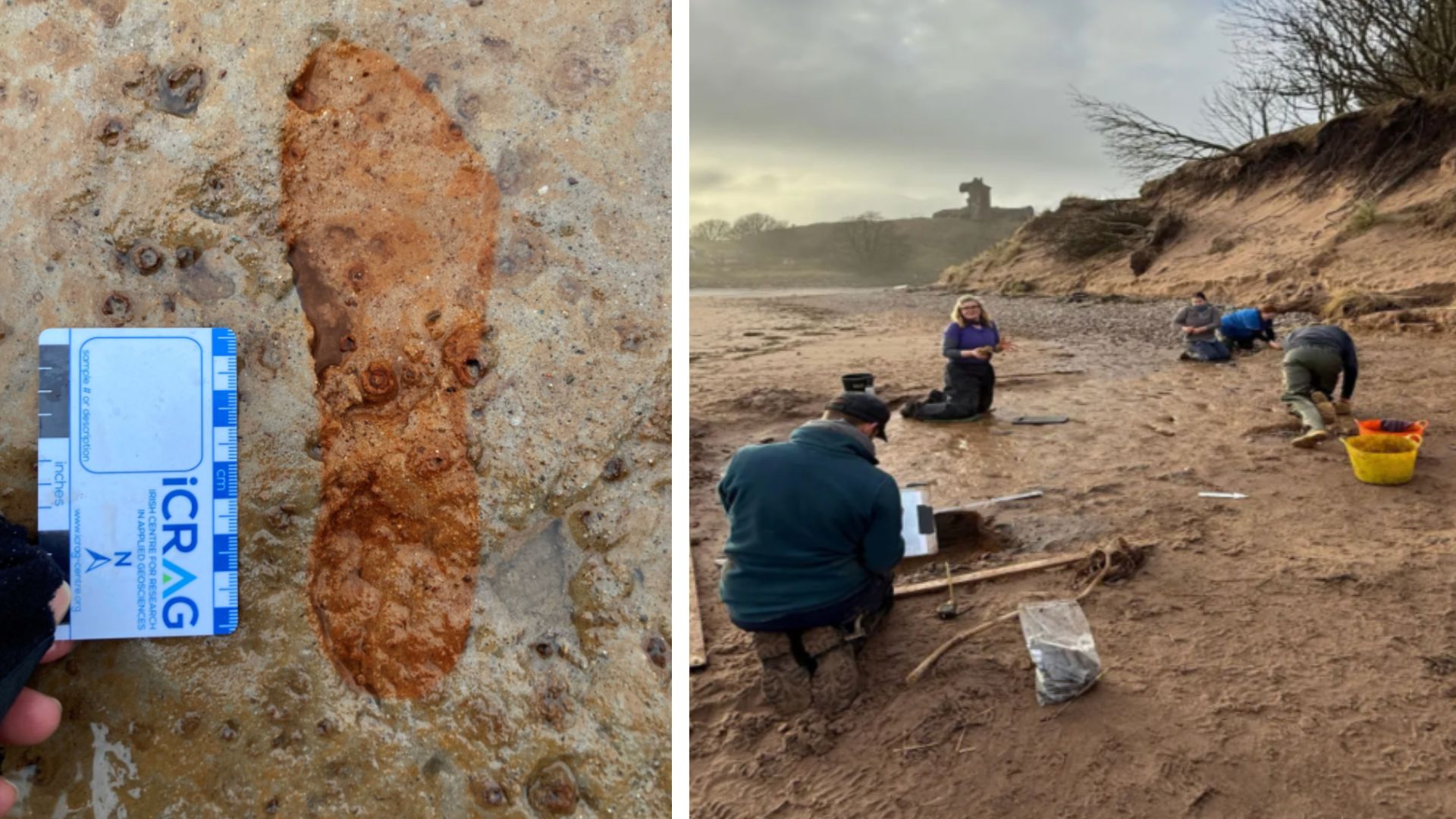
• Rare 2,000-year-old footprints found on Scottish beach, archaeologists rush to save In an archaeological emergency, a team rushed to Lunan Bay to preserve an exceptionally rare 2,000-year-old footprint in the sand. • After receiving a “911” call of sorts, archaeologists rushed to Lunan Bay in eastern Scotland to preserve an exceptionally rare footprint dating back to the Roman expansion into Britain before the sea could wash it away. • Ivor Campbell and Jenny Snedden were taking a casual stroll on the beach with their dogs, Ziggy and Juno, when they noticed that recent storms had stripped the dunes to reveal a footprint preserved in a once-hidden layer of clay. • In a thrilling chain of events, the locals called council archaeologist Bruce Mann, who then alerted experts from the University of Aberdeen; they rushed to the scene-stopping by a craft store to pick up plaster as time was of the essence. • Working against 55 mph winds with the tide threatening to wash away the treasure, they all knew these locals had stumbled upon a find of unparalleled importance, as only a few such prints have ever been found in England, and none previously in Scotland. • The archaeologists painstakingly sought to digitally and physically capture the print before the elements wiped “a real tangible link to the region’s past” off the beach.
Article Summaries:
- A team of archaeologists rushed to Lunan Bay in eastern Scotland after locals discovered a 2,000‑year‑old footprint preserved in a layer of clay exposed by recent storms. The print, dating to the period of Roman expansion into Britain, is the first of its kind found in Scotland and one of only a few such footprints known in the UK. Under high winds and a rising tide, researchers quickly created 3‑D models and physical casts before the waves erased the site. The find offers a rare glimpse into the landscape and human activity of the region during the early Roman era.
Sources: