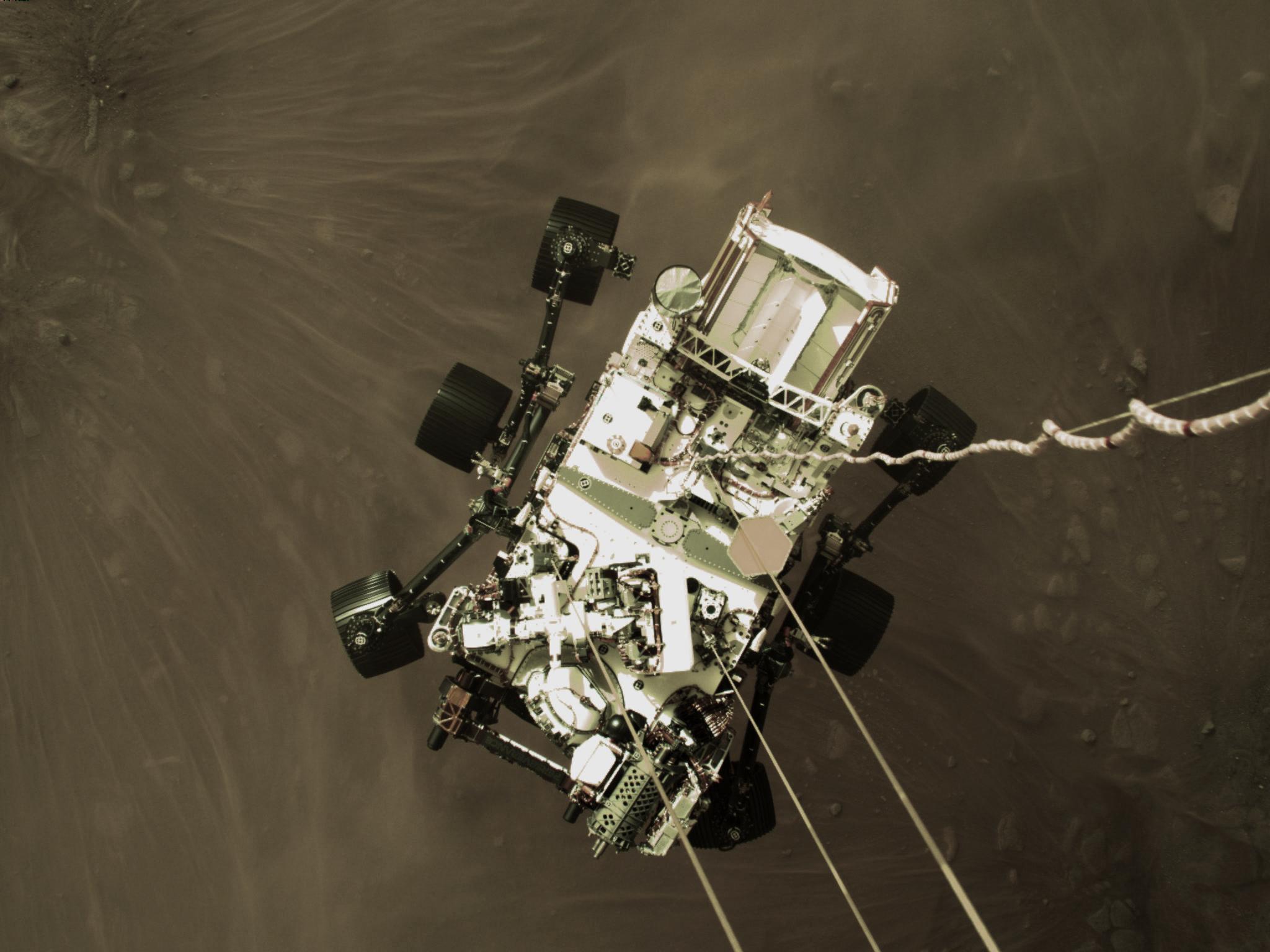
• Perseverance landed in Jezero Crater, a former river delta, to search for ancient microbial life. • In 2024, rover sampled Chevaya Falls rock, revealing potential biosignatures needing further analysis. • Mars Global Localization lets Perseverance autonomously determine position using panoramic images and orbital maps. • The rover’s technology demonstrates advanced AI navigation, reducing reliance on Earth commands. • Findings help assess Mars’ past habitability and guide future exploration missions. • NASA’s Jezero mission continues to uncover clues about early Martian ecosystems.
Article Summaries:
- NASA’s Perseverance rover, launched in 2020, has successfully landed in Jezero Crater on Mars, a site chosen for its ancient river delta and potential water history. The rover’s mission is to search for signs of past microbial life, with a focus on identifying biosignatures. In summer 2024, it collected a sample from the “Chevaya Falls” rock, which shows possible biosignatures that require further analysis before any definitive conclusions can be drawn. Additionally, Perseverance now employs a new “Mars Global Localization” system developed by JPL, allowing it to determine its position autonomously by matching panoramic images to onboard orbital maps.
- NASA’s Perseverance rover, which landed in Jezero Crater on Feb. 18, 2020, is actively searching for evidence of ancient microbial life. The crater’s former river delta environment makes it an ideal site for past habitability studies. In summer 2024, the rover collected a sample from the “Chevaya Falls” rock, where preliminary analyses revealed potential biosignatures-markers that could indicate past life, though further data are needed before any definitive conclusions. In addition to scientific discoveries, Perseverance is testing a new autonomous navigation system, Mars Global Localization, that lets the rover determine its position by matching panoramic images with onboard terrain maps without human input.
Sources: