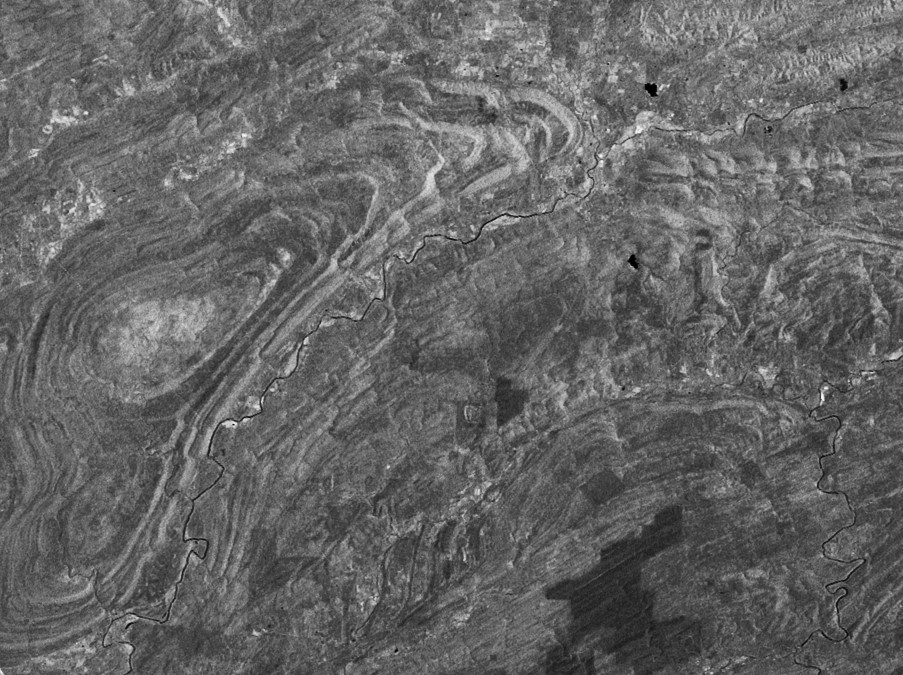
• 7 min read Peering Homeward, 1972 Alicia Cermak On July 23, 1972 the first civilian satellite designed to image Earth’s land surfaces was launched from Vandenberg Air Force Base in California. • On board the satellite, originally named the Earth Resources Technology Satellite (ERTS), but later known as Landsat 1, were two sensors. • The primary sensor, called the Return Beam Vidicon (RBV), used three shuttered cameras to take photographs; the secondary sensor, the Multispectral Scanner System (MSS) was an experimental instrument. • Both sensors were packed onto a “butterfly-shaped” spacecraft repurposed from the successful Nimbus weather missions. • There were strict size and weight limitations for the sensors, especially the experimental MSS that weighed less than the primary RBV sensor and the data recorder. • (At over 150 pounds, the data recording system onboard was the biggest recording device ever orbited.) The MSS technology was a novel way of looking at Earth.
Sources: