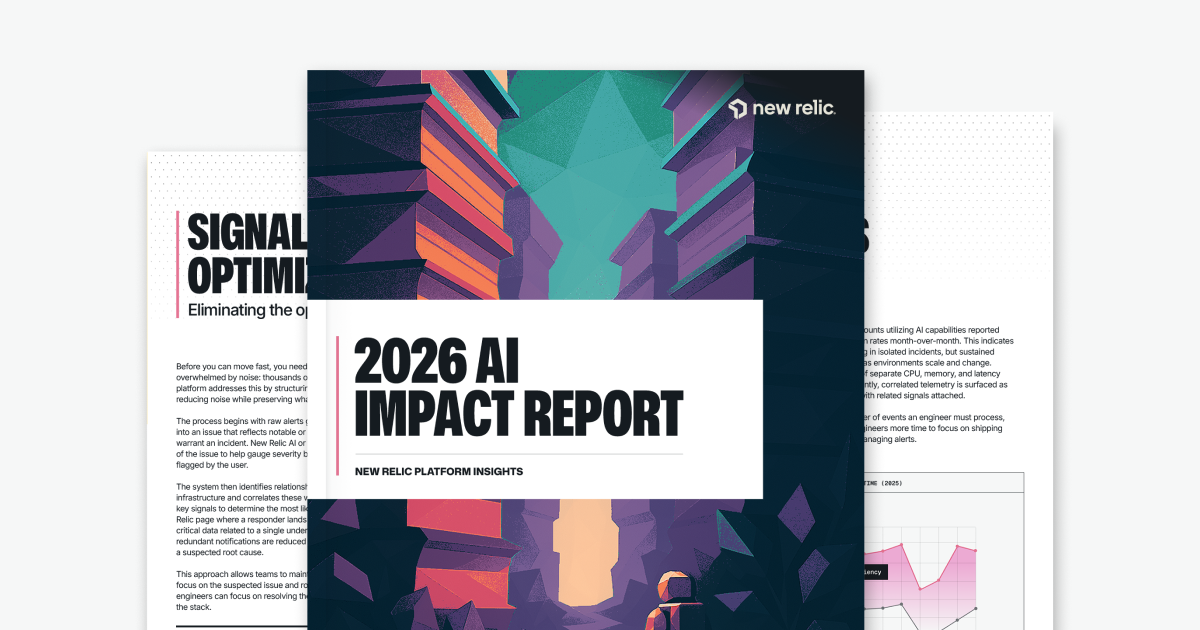
• 33% of engineers’ weekly time is lost to firefighting, creating a silent productivity tax. • AI-enabled observability cuts alert noise by 27%, allowing teams to focus on root causes. • AI groups related errors into single actionable incidents, achieving a 2× higher correlation rate. • Noisy-alert rates drop to 46% with AI, compared to over 70% in non-AI environments. • Incident response times improve, with AI-driven MTTC reductions proving measurable productivity gains. • Higher deployment velocity correlates with AI-strengthened observability, accelerating code shipping cycles. • New Relic’s 2026 AI Impact Report quantifies these gains, guiding teams toward smarter firefighting.
Article Summaries:
- New Relic’s 2026 AI Impact Report shows that AI‑enhanced observability significantly reduces engineering “firefighting” and boosts productivity. AI‑enabled teams cut alert noise by 27 % and achieve twice the correlation rate of non‑AI accounts, allowing engineers to focus on root causes rather than symptom sprawl. Incident response improves, with AI users resolving issues 25 % faster on average and cutting mean time to close by over 23 minutes during peak periods. Deployment velocity rises sharply: AI teams ship code 80 % more frequently, reaching up to 453 deployments per day versus 87 for non‑AI teams. The report frames AI as a necessary investment to offset the growing operational tax of distributed systems.
Sources: