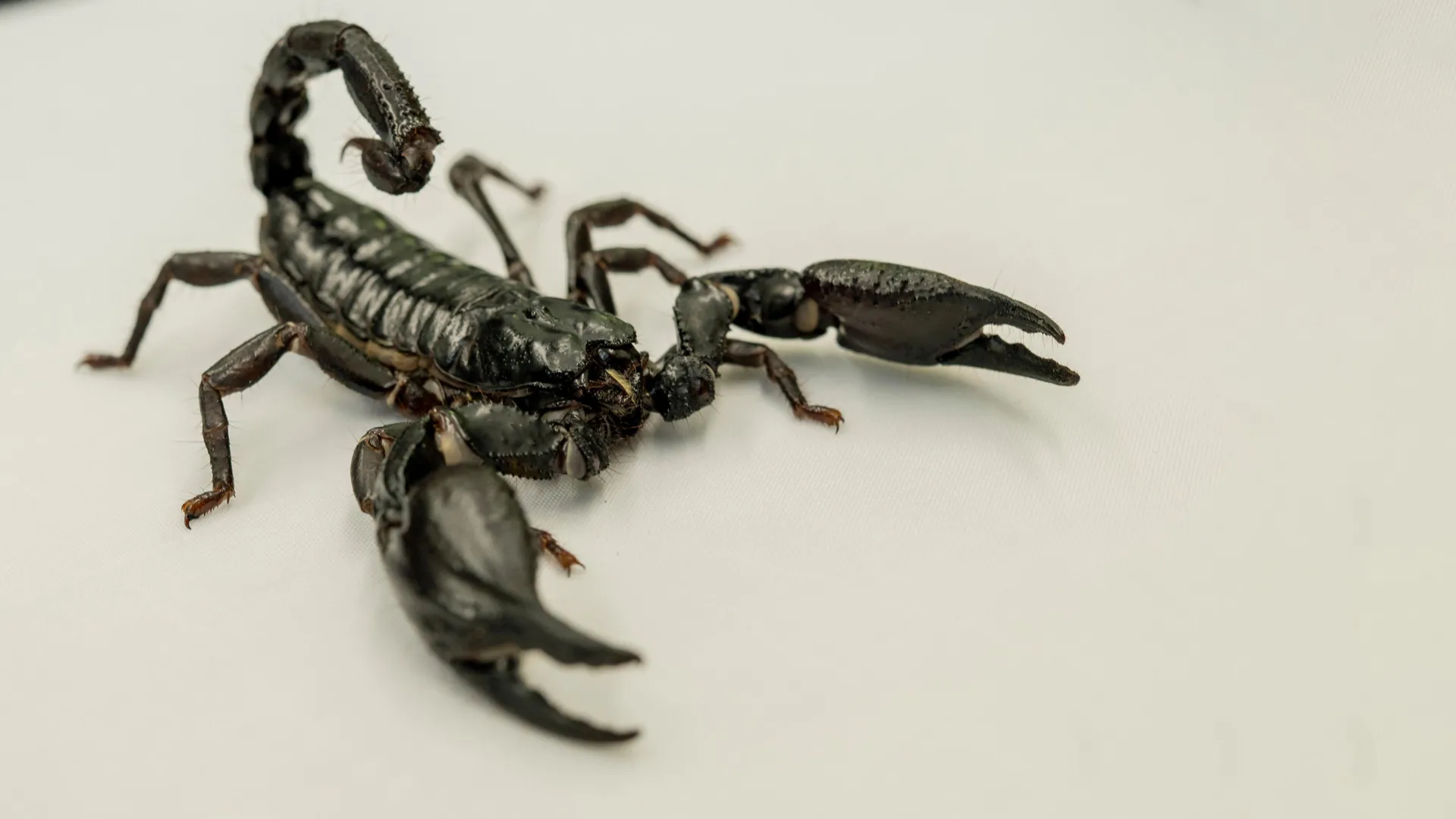
• New map reveals where lethal scorpions are most likely to strike Scientists have found a way to map deadly scorpion hotspots before they strike. • An international team of researchers has developed a method to identify and forecast hotspots for some of the most dangerous scorpion species on Earth. • By examining environmental conditions, the scientists determined which factors allow highly venomous scorpions to survive and spread – insights that could help reveal where scorpion stings are most likely to occur in tropical regions around the world. • To reach their conclusions, the team combined field research in Africa with advanced computer modeling. • This approach allowed them to estimate where high risk scorpion species are most likely to live and which environmental features shape their distribution. • Their results revealed a clear pattern – soil type is the primary factor influencing where most scorpions are found, while temperature, including both average levels and seasonal variation, plays an important role for certain species.
Article Summaries:
- Scientists from the University of Galway and the University Ibn Zohr have produced a predictive map of hotspots for the world’s most dangerous scorpion species. By combining field surveys in Africa with advanced computer modeling-specifically a Maximum Entropy approach-the team identified soil type as the primary determinant of scorpion distribution, with temperature patterns also influencing certain species. The study, published in Environmental Research Communications, focuses on central Morocco, a major sting‑risk area, and aims to guide targeted prevention, training, and antivenom development. The mapping method could be applied globally to reduce scorpion‑related morbidity and mortality.
Sources: