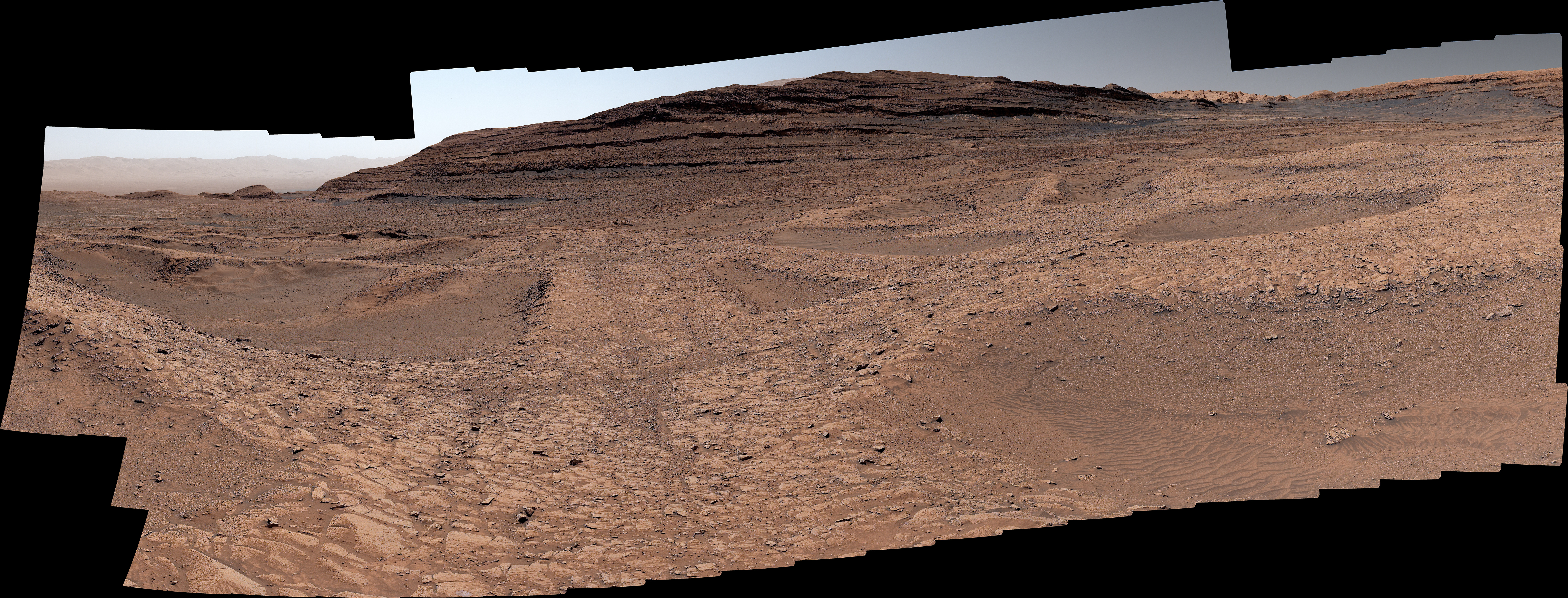
• 5 min read NASA’s Curiosity Rover Sees Martian ‘Spiderwebs’ Up Close Jet Propulsion Laboratory Contents Unpacking boxwork Roving laboratory More about Curiosity News Media Contacts For about six months, NASA’s Curiosity Mars rover has been exploring a region full of geologic formations called boxwork, low ridges standing roughly 3 to 6 feet (1 to 2 meters) tall with sandy hollows in between. • Crisscrossing the surface for miles, the formations suggest ancient groundwater flowed on this part of the Red Planet later than scientists expected. • This possibility raises new questions about how long microbial life could have survived on Mars billions of years ago, before rivers and lakes dried up and left a freezing desert world behind. • The boxwork formations look likegiant spiderwebswhen viewed from space. • To explain the shapes, scientists have proposed that groundwater once flowed through large fractures in the bedrock, leaving behind minerals. • Those minerals then strengthened the areas that became ridges while other portions without mineral reinforcement were eventually hollowed out by wind.
Article Summaries:
- NASA’s Curiosity rover has captured the first close‑up images of Martian “boxwork” formations-low ridges and sandy hollows that resemble spiderwebs from orbit. The rover’s observations confirm that the dark lines seen in orbital data are indeed fractures where groundwater once seeped, depositing minerals that reinforced the ridges while wind later hollowed out the unreinforced areas. The discovery suggests the groundwater table on Mars remained high farther up Mount Sharp than previously thought, implying liquid water-and potentially habitable conditions-persisted longer than expected. Curiosity also found mineral nodules on ridge walls and hollows, but not directly along the fractures, adding new clues to the planet’s hydrologic history.
- NASA’s Curiosity rover has taken the first close‑up images of Martian “boxwork” ridges-spider‑web‑like formations on Mount Sharp that suggest ancient groundwater flow. The rover’s wheels crossed ridges only a few feet high and entered the surrounding hollows, confirming that the dark lines seen from orbit are fractures where mineral‑rich water once seeped. Curiosity also found nodules along ridge walls and hollows, further evidence of past groundwater. These observations imply the subsurface water table remained high longer than previously thought, raising new questions about how long microbial life could have survived on Mars before the planet dried out.
- For about six months, NASA’s Curiosity Mars rover has been exploring a region full of geologic formations called boxwork, low ridges standing roughly 3 to 6 feet (1 to 2 meters) tall with sandy hollows in between. Crisscrossing the surface for miles, the formations suggest ancient groundwater flowed on this part of the Red Planet later than scientists expected. This possibility raises new questions about how long microbial life could have survived on Mars billions of years ago, before rivers and lakes dried up and left a freezing desert world behind. The boxwork formations look like giant spid
- NASA’s Curiosity rover has released close‑up images of “boxwork” formations on Mars, a network of low ridges 3-6 ft (1-2 m) high separated by sandy hollows. The spider‑web‑like pattern, visible across miles of terrain, indicates that groundwater once flowed in this region later than previously thought. This late hydrologic activity suggests that liquid water-and potentially habitable conditions-persisted on Mars longer than models had predicted. The discovery raises new questions about how long microbial life could have survived before the planet’s rivers and lakes dried and the surface froze.
Sources:
- https://www.nasa.gov/missions/mars-science-laboratory/curiosity-rover/nasas-curiosity-rover-sees-martian-spiderwebs-up-close/
- https://www.jpl.nasa.gov/news/nasas-curiosity-rover-sees-martian-spiderwebs-up-close
- https://phys.org/news/2026-02-curiosity-rover-captures-martian-spiderwebs.html (Latest source article published: 2026-02-23 18:20 UTC)