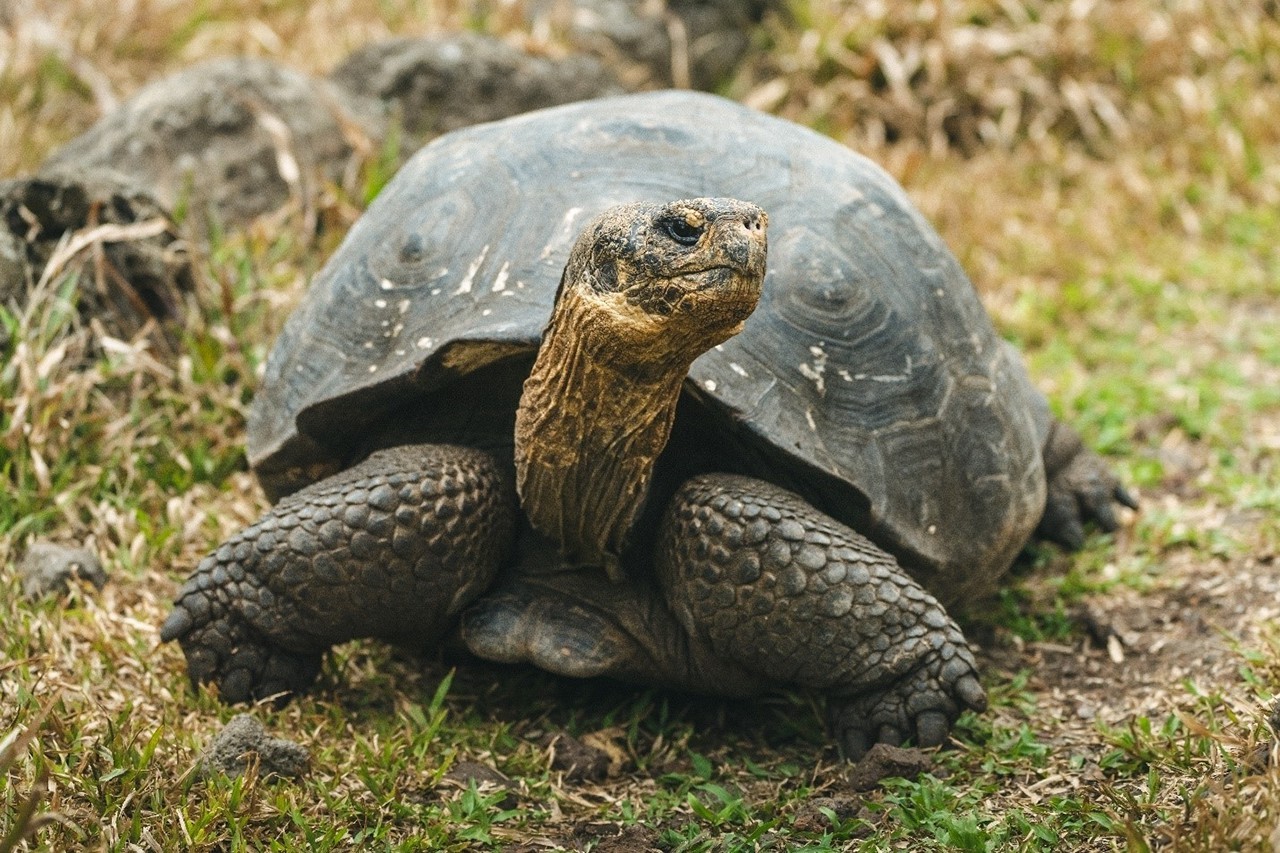
• NASA Is Helping Bring Giant Tortoises Back to the Galápagos Emily DeMarco Writer/Editor (IV), Earth Science Division Contents Matching Tortoises to Landscape More Than Conservation For the first time in more than 150 years, giant tortoises are returning to the wild on Floreana Island in the Galápagos - guided by NASA satellite data that helps scientists discover where the animals can find food, water, and nesting habitat. • The effort, a collaboration between the Galápagos National Park Directorate and Galápagos Conservancy, marks a key milestone in restoring tortoise populations to one of the most ecologically distinctive archipelagos on Earth. • On Floreana Island, tortoises disappeared in the mid-1800s after heavy hunting by whalers and the introduction of new predators like pigs and rats, which consumed tortoise eggs and hatchlings. • Without the tortoises, the island began to change. • Across the Galápagos, giant tortoises historically helped shape the landscape by grazing vegetation, opening pathways through dense plant growth, and carrying seeds across islands. • “This is exactly the kind of project where NASA Earth observations make a difference,” said Keith Gaddis, the manager for NASA Earth Action’s Biological Diversity and Ecological Forecasting program at NASA Headquarters in Washington.
Article Summaries:
- NASA Earth‑observation data are guiding the first return of giant tortoises to Floreana Island in the Galápagos in more than 150 years. On Feb. 20, 158 tortoises were released at two sites as part of a partnership between the Galápagos National Park Directorate and the Galápagos Conservancy. Satellite imagery helps scientists map vegetation, moisture, and temperature to identify areas where the animals can find food, water, and nesting habitat, increasing their chances of long‑term survival. The project follows a long‑term rewilding effort that has released over 10,000 tortoises across the archipelago, restoring a species that historically shaped the islands’ ecosystems.
- NASA satellite data is guiding the reintroduction of giant tortoises to Floreana Island in the Galápagos, marking the first return of the species there in more than 150 years. The project, a partnership between the Galápagos National Park Directorate and Galápagos Conservancy, released 158 tortoises on February 20 at two sites chosen based on NASA’s Earth observations of vegetation, moisture, and temperature patterns. The data help scientists identify suitable food, water, and nesting habitats, increasing the animals’ chances of survival. This effort is part of a broader rewilding program that has released over 10,000 tortoises across the archipelago in the past six decades.
Sources: