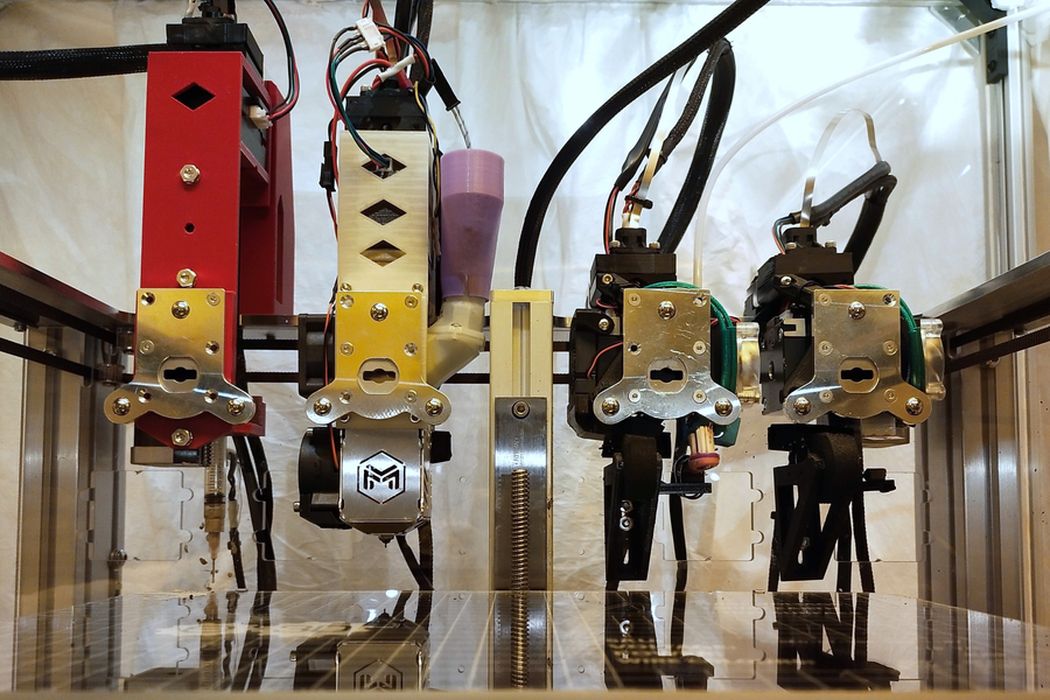
• MIT engineers have 3D printed a working electric motor. • That’s quite a feat because electric motors are made of metal and plastic, and most 3D printers can make objects in one or the other materials only. • In their experiment, they developed a specialized 3D printer that includes four different materials that can be printed in the same job. • The trick here is that some of these extruders can handle conductive or magnetic materials, along with the usual plastic extrusions. • It sounds like the design of the system had to be carefully considered. • They explain: “They carefully designed each extruder to balance the requirements and limitations of the material.
Article Summaries:
- MIT engineers have demonstrated a fully functional electric motor printed in a single job using a custom 3D printer that can deposit four distinct materials-including conductive and magnetic components-simultaneously. The team fabricated a linear motor in just a few hours, requiring only one post‑processing step to achieve full operation. This milestone shows that complex, end‑use machines can be produced without the traditional “print parts and assemble” workflow, potentially reducing assembly time, inventory costs, and downtime for industrial production. The breakthrough suggests a future where functional machine parts could be printed on demand directly in factories or even shared on design platforms.
- MIT engineers have 3D printed a working electric motor. That’s quite a feat because electric motors are made of metal and plastic, and most 3D printers can make objects in one or the other materials only. In their experiment, they developed a specialized 3D printer that includes four different materials that can be printed in the same job. The trick here is that some of these extruders can handle conductive or magnetic materials, along with the usual plastic extrusions. It sounds like the design of the system had to be carefully considered. They explain: “They carefully designed each extruder
Sources:
- https://www.fabbaloo.com/news/mit-engineers-3d-print-fully-functional-electric-motor (Latest source article published: 2026-02-23 16:11 UTC)