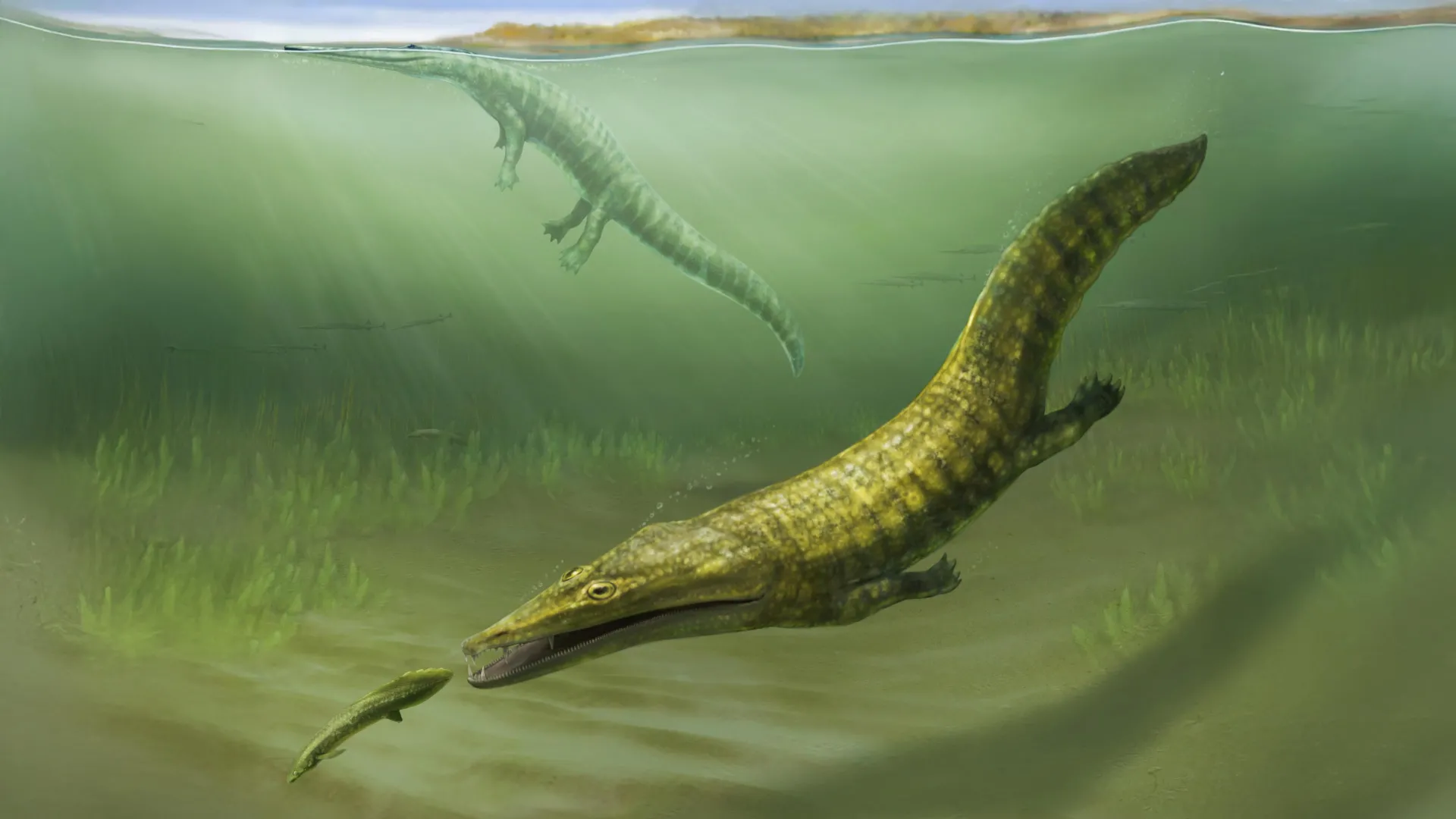
• Lost fossils reveal sea monsters that took over after Earthâ s greatest extinction About 250 million years ago, a region that is now a harsh desert in remote northwestern Australia lay along the edge of a shallow bay connected to a vast prehistoric ocean • Fossils collected there more than six decades ago and largely overlooked in museum collections are now reshaping scientists’ understanding of how land animals first returned to the sea and spread across the globe • The end-Permian mass extinction, the most devastating die-off in Earth’s history, struck about 252 million years ago and was followed by extreme global warming • In its aftermath, modern-style marine ecosystems began to take shape at the start of the Age of Dinosaurs (or Mesozoic era) • During this critical window, the earliest sea-going tetrapods (limbed vertebrates), including amphibians and reptiles, emerged and quickly became dominant aquatic apex predators • Most fossils of these early marine hunters have been found in the northern hemisphere
Article Summaries:
- Lost fossils reveal sea monsters that took over after Earthâs greatest extinction - Date: - February 25, 2026 - Source: - Swedish Museum of Natural History - Summary: - A lost cache of 250-million-year-old fossils from Australia has rewritten part of the story of life after Earthâs worst mass extinction. Instead of a single marine amphibian species, researchers uncovered evidence of a surprisingly diverse community of early ocean predators. One of these creatures had relatives stretching from the Arctic to Madagascar, showing that some of the first sea-going tetrapods spread across the globe w
Sources:
- https://www.sciencedaily.com/releases/2026/02/260224023203.htm (Latest source article published: 2026-02-25 10:20 UTC)