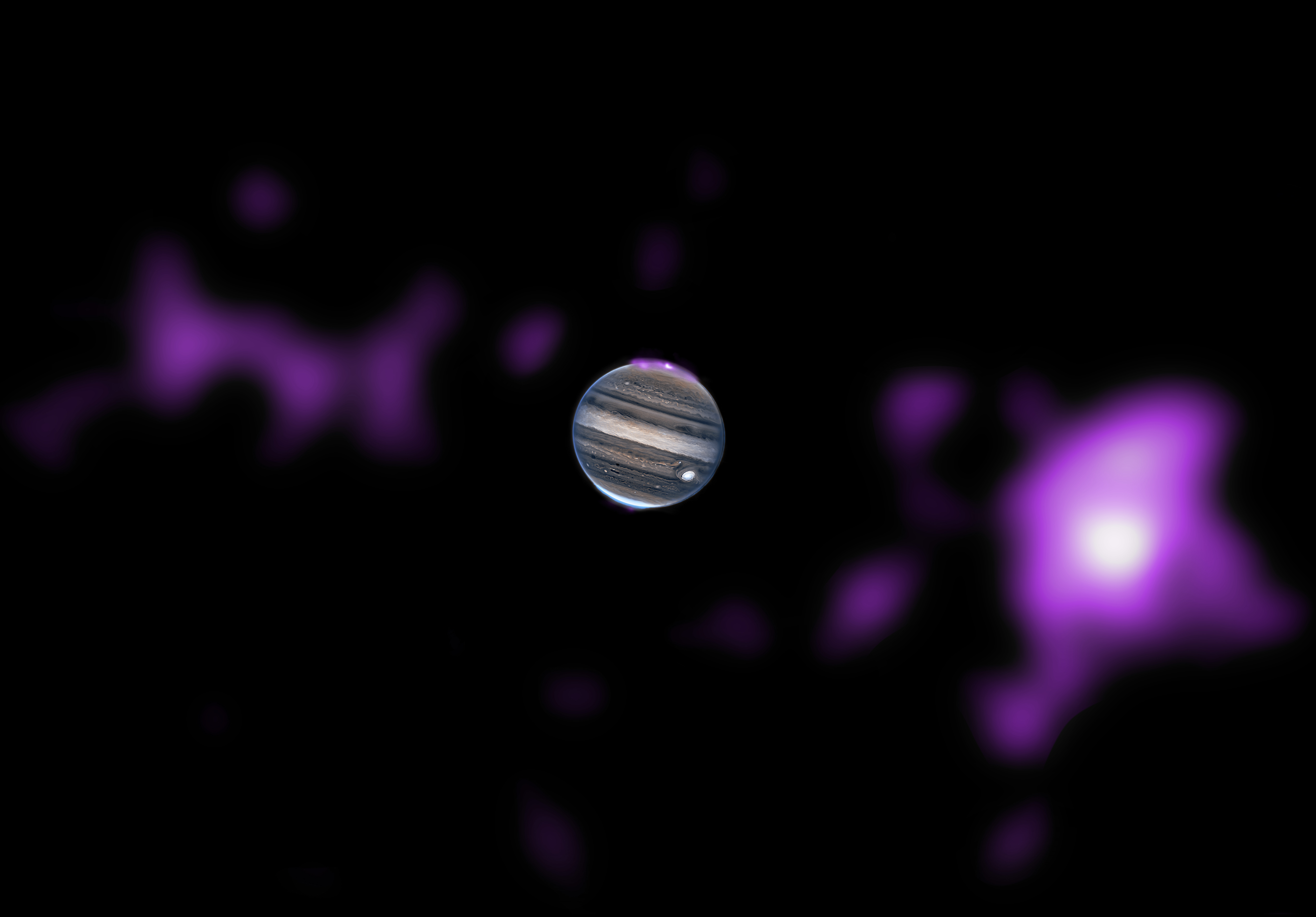
• Listen to This Month’s ‘Planetary Parade’ With NASA’s Chandra Lee Mohon Contents Jupiter Saturn Uranus Visual Description News Media Contact In late February, people in the Northern Hemisphere can look up for a special sight : Six planets will all be visible from clear and dark night skies • New sonifications from NASA’s Chandra X-ray Observatory released [day of week] will help commemorate this latest “planetary parade • " Because the planets in our solar system travel around the Sun in the same plane (known as the ecliptic), they will sometimes appear bunched together in the sky when their orbits find them on the same side of the Sun at the same time • When this happens, it looks like the planets have roughly formed a line from our vantage point on Earth • In Chandra’s sonifications, which translate astronomical data into sound, three of the planets that will be on display - Jupiter, Saturn, and Uranus - can be seen and heard in ways that they cannot from Earth • While Chandra is best known for its X-ray insight into black holes and other extreme objects, the telescope has also played an important role in the exploration of our solar system
Article Summaries:
- In late February, people in the Northern Hemisphere can look up for a special sight : Six planets will all be visible from clear and dark night skies. New sonifications from NASA’s Chandra X-ray Observatory released [day of week] will help commemorate this latest “planetary parade.” Because the planets in our solar system travel around the Sun in the same plane (known as the ecliptic), they will sometimes appear bunched together in the sky when their orbits find them on the same side of the Sun at the same time. When this happens, it looks like the planets have roughly formed a line from our v
Sources:
- https://www.nasa.gov/missions/chandra/listen-to-this-months-planetary-parade-with-nasas-chandra/ (Latest source article published: 2026-02-25 17:26 UTC)