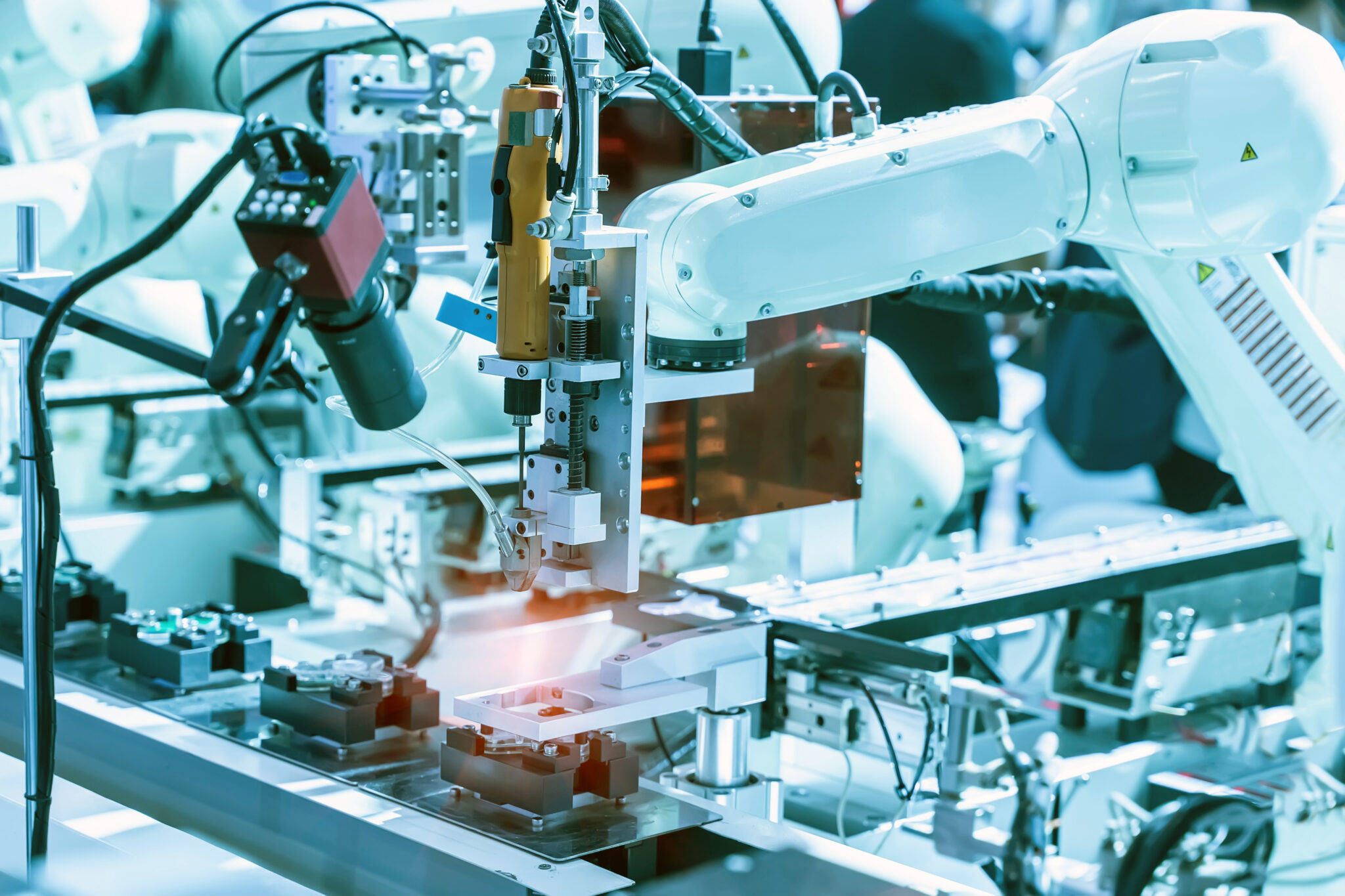
• Motion control is enabling new levels of robotic precision. • Source: Adobe Stock Garnering much attention these days are industrial robots and their integration of motion components and incorporation into workcells with other motion-based automated equipment. • Such robotic workcells also feature conveyors, vision systems, and machines to automate specific tasks. • So, what makes a motion system a robot or machine? • In other words, what’s the distinction between motion systems used in automated machinery and that taking the form of robots? • The latter are capable of automatically executing complex and programmable (and especially reconfigurable) movement sequences.
Article Summaries:
- Integrated motion control is driving more sophisticated robot motion in modern industrial workcells. By combining linear guides, ball‑screws, encoders, and pre‑integrated actuators, manufacturers can build Cartesian, SCARA, and articulated robots that execute complex, reconfigurable tasks with reduced latency and cost. The same motion‑component technologies that power automated guided vehicles and machine‑tending systems are now being adapted for robotics, allowing suppliers to offer fully integrated robots or modular subsystems. This convergence simplifies synchronization of multi‑axis motion, supports a wide range of applications-from material handling to laboratory automation-and blurs the line between traditional machines and true robotic manipulators.
- Integrated motion control is driving advanced robot capabilities by combining linear‑guide, ball‑screw, and encoder technologies into versatile workcells that include conveyors, vision systems, and other automated equipment. The article distinguishes true robots-reprogrammable, multi‑axis manipulators-from single‑purpose machines like vending units. It highlights that Cartesian, SCARA, and articulated robots share core components and can be customized for tasks such as material handling, machine tending, and light assembly. Suppliers now offer pre‑integrated robots and modular motorized axes, including closed‑loop stepper motors for lightweight applications. The focus is on reducing latency, complexity, and cost while enabling reconfigurable motion sequences.
- Industrial robotics are increasingly built around integrated motion‑control components, allowing robots to perform complex, reconfigurable movements while working alongside conveyors, vision systems, and other automated equipment. The article distinguishes robots-multi‑axis, reprogrammable manipulators-from single‑purpose machines like vending units. It notes that Cartesian, SCARA, and articulated robots share common technologies such as linear guides, ball screws, and closed‑loop stepper motors, and that suppliers now offer pre‑integrated robots or modular motion solutions. The focus is on reducing latency, complexity, and cost in material handling, machine tending, and other applications that combine robotics with other motion systems.
- Integrated motion control is driving more sophisticated robot motion by blending linear‑guide, ball‑screw, encoder, and motor technologies across articulated, SCARA, and Cartesian robots. The article clarifies that robots are reprogrammable, multi‑axis manipulators capable of complex, adaptable sequences, unlike single‑purpose machines such as vending units. It notes that many motion‑component suppliers now offer pre‑integrated robots or modular subsystems, reducing latency, complexity, and cost for material handling, machine tending, and other automation tasks. The piece highlights the growing overlap between robot and AGV technologies and the role of closed‑loop stepper motors in light‑assembly and laboratory applications.
Sources:
- https://www.therobotreport.com/integrated-motion-control-enables-sophisticated-robot-motion/ (Latest source article published: 2026-02-22 13:30 UTC)