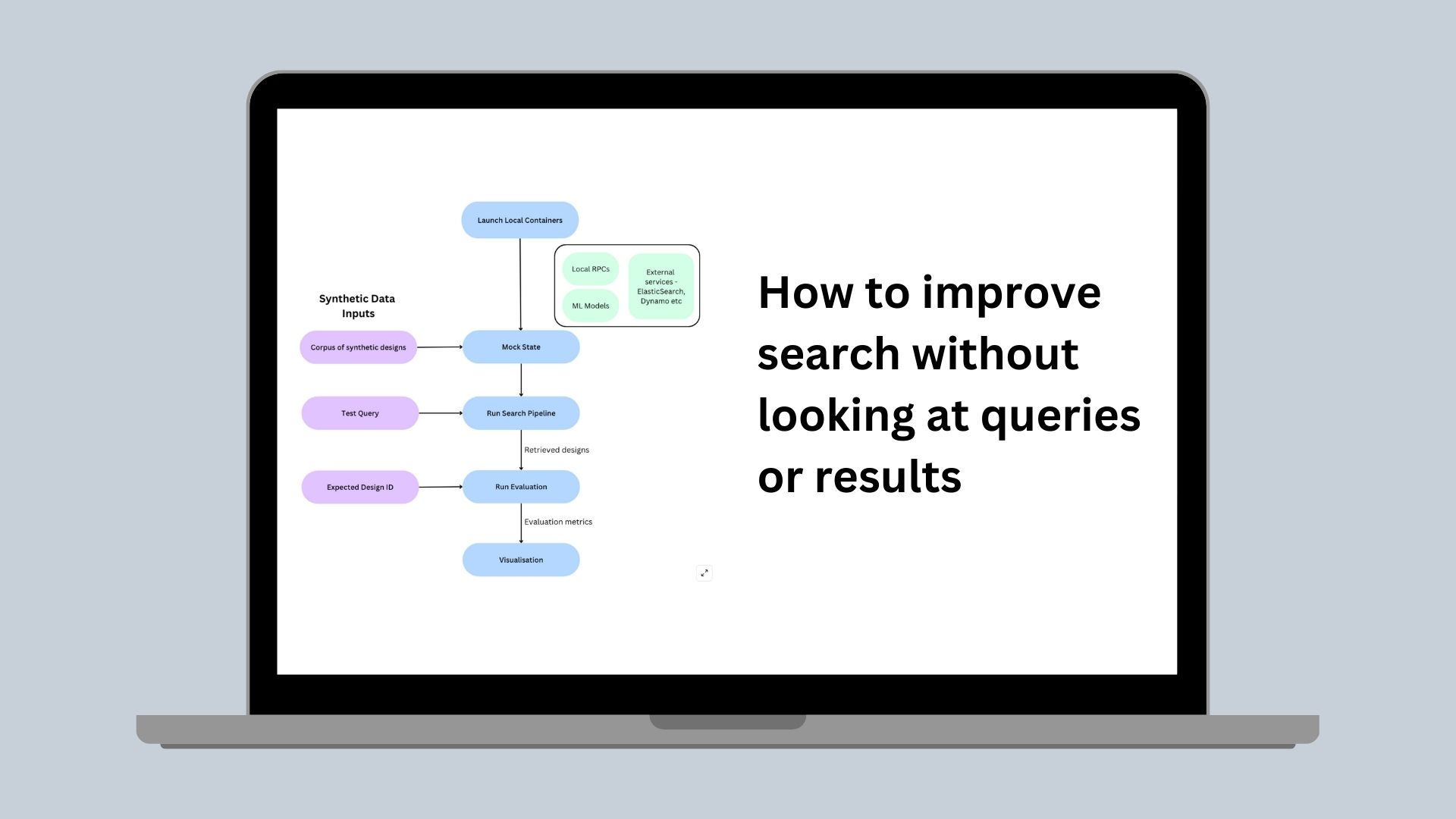
• Canva’s 200M MAUs and 30B designs make private search optimization critical. • Privacy policy forbids viewing personal designs, eliminating real query‑label datasets. • Engineers previously relied on limited manual testing with known bad queries. • Generative AI enabled creation of realistic synthetic designs and queries, preserving privacy. • Synthetic dataset allowed offline evaluation of recall, precision, and ranking improvements. • Challenges included ensuring synthetic data realism and aligning metrics with real user experience.
Article Summaries:
- Machine Learning How to improve search without looking at queries or results How we improved Canvaâs private design search while respecting the privacy of our community. In October 2024, Canva celebrated the milestone of 200M monthly active users (MAUs). Our customers have over 30 billion designs on Canva and create almost 300 new designs every second. With this growth rate, the ability for Canva Community members to effectively search for and find their designs, as well as those shared to them by team members, is becoming an increasingly challenging and essential problem to solve. In fields o
- Canva has launched a new synthetic‑data pipeline to improve its private design search without accessing real user queries or designs. With 200 million monthly active users and 30 billion designs, the company needed a way to evaluate search changes offline while protecting privacy. Previously, engineers ran a handful of test queries in their own accounts and then relied on slow, user‑based A/B experiments, which offered limited statistical power and risked exposing users to poor results. By generating realistic but entirely synthetic queries and content with generative AI, Canva can now run robust offline tests, quickly identify ineffective changes, and reduce the number of live experiments required.
Sources: