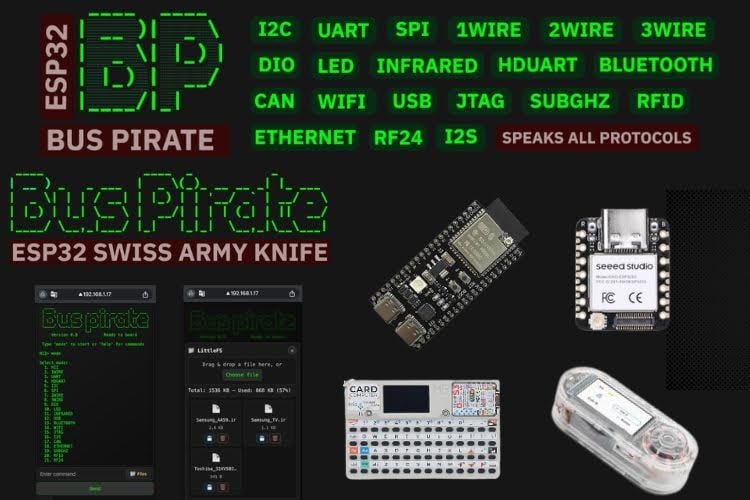
• The ESP32Bus Pirate projecthas received a major update, further transforming it into a powerful and affordableembedded systems debugging platform. • Originally inspired by theClassic Bus Pirate, this firmware-based implementation allows low-cost ESP32-S3 development boards to function as multi-protocol communication tools. • Like the original hardware tool, it supports common interfaces such as I²C, SPI, UART, and 1-Wire, but now extends beyond basic communication into advanced signal inspection and experimentation features. • The latest update introduces several usability and structural improvements. • A newprofile systemenables users to save and reload complete pin configurations, making it easier to switch between different hardware setups. • The command line interface has been enhanced withauto completionand improved command handling, while internal storage has been expanded to approximately4.5MBfor logging and file management.
Article Summaries:
- The ESP32‑Bus Pirate firmware has been updated to turn low‑cost ESP32‑S3 boards into a versatile, affordable debugging platform. Building on the Classic Bus Pirate’s multi‑protocol support (I²C, SPI, UART, 1‑Wire), the new release adds advanced signal‑inspection features, including a “Wizard” pin activity analyzer that detects PWM, data bursts, and noise, giving basic logic‑analysis capability. A profile system now lets users save and reload full pin configurations, while the CLI gains auto‑completion and improved command handling. Internal storage expands to ~4.5 MB for logging. UART support now auto‑detects pins, performs autobaud analysis, and emulates devices such as GPS modules. The firmware supports several ESP32‑S3 boards and plans for FM radio, cellular, and 5 GHz Wi‑Fi integration.
- The ESP32 Bus Pirate project has received a major update, further transforming it into a powerful and affordable embedded systems debugging platform. Originally inspired by the Classic Bus Pirate, this firmware-based implementation allows low-cost ESP32-S3 development boards to function as multi-protocol communication tools. Like the original hardware tool, it supports common interfaces such as I²C, SPI, UART, and 1-Wire, but now extends beyond basic communication into advanced signal inspection and experimentation features. The latest update introduces several usability and structural improve
Sources:
- https://circuitdigest.com/news/esp32-bus-pirate-expands-into-a-powerful-debug-tool (Latest source article published: 2026-02-23 09:52 UTC)