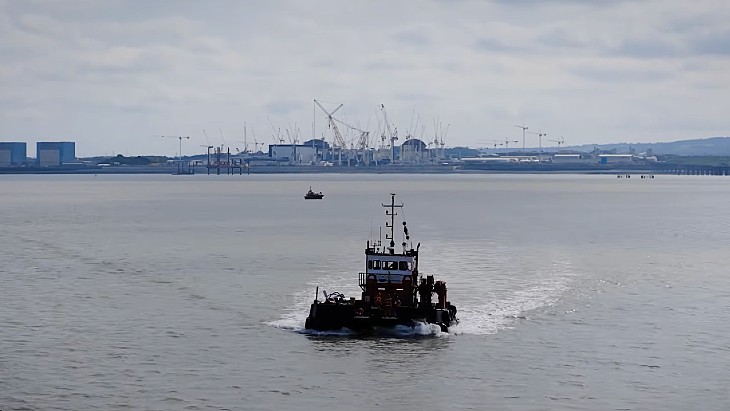
• EDF to seek approval for new acoustic fish deterrent system The original plan The company building the Hinkley Point C nuclear power plant in southwest England had originally been given planning permission in 2013 for a scheme with low velocity cooling water intake heads and a fish return system to minimise the numbers of fish getting sucked into the plant’s cooling water system. • It also involved having 280 underwater speakers to blast out noises - sometimes referred to as a ‘fish disco’ - to keep fish away from the intake areas. • However, EDF later said that the “fast-flowing tides and poor visibility posed significant risks for divers” and instead it was considering replacing the acoustic fish deterrent plan and instead creating up to 900 acres (324 hectares) of saltmarsh in environmental mitigation. • However, that plan faced local opposition in community consultations, and legal challenges threatened to add to delays for the nuclear power plant project. • The new acoustic fish deterrent system In March 2025 EDF announced that trials were beginning on an “innovative” new type of acoustic fish deterrent that it had previously not known about. • It involves using ceramic transducers to make targeted very high-frequency sound and was a fairly new technology deployed in the fishing industry to reduce by-catch and had not been considered for use for a power station before.
Article Summaries:
- EDF is seeking approval for a new acoustic fish deterrent system at the Hinkley Point C nuclear plant. In March 2025 the company began trials of a high‑frequency ceramic‑transducer system, a technology previously used only in the fishing industry. Early sea‑trial data show the device reduces fish proximity to intake tunnels by over 90 % - only one tagged shad approached the intake heads when the system was active, compared with 14 without it. The system is low‑power, surface‑maintainable and designed to minimise impacts on marine mammals. EDF’s plan follows earlier proposals for underwater speakers and saltmarsh creation, which faced local opposition.
Sources: