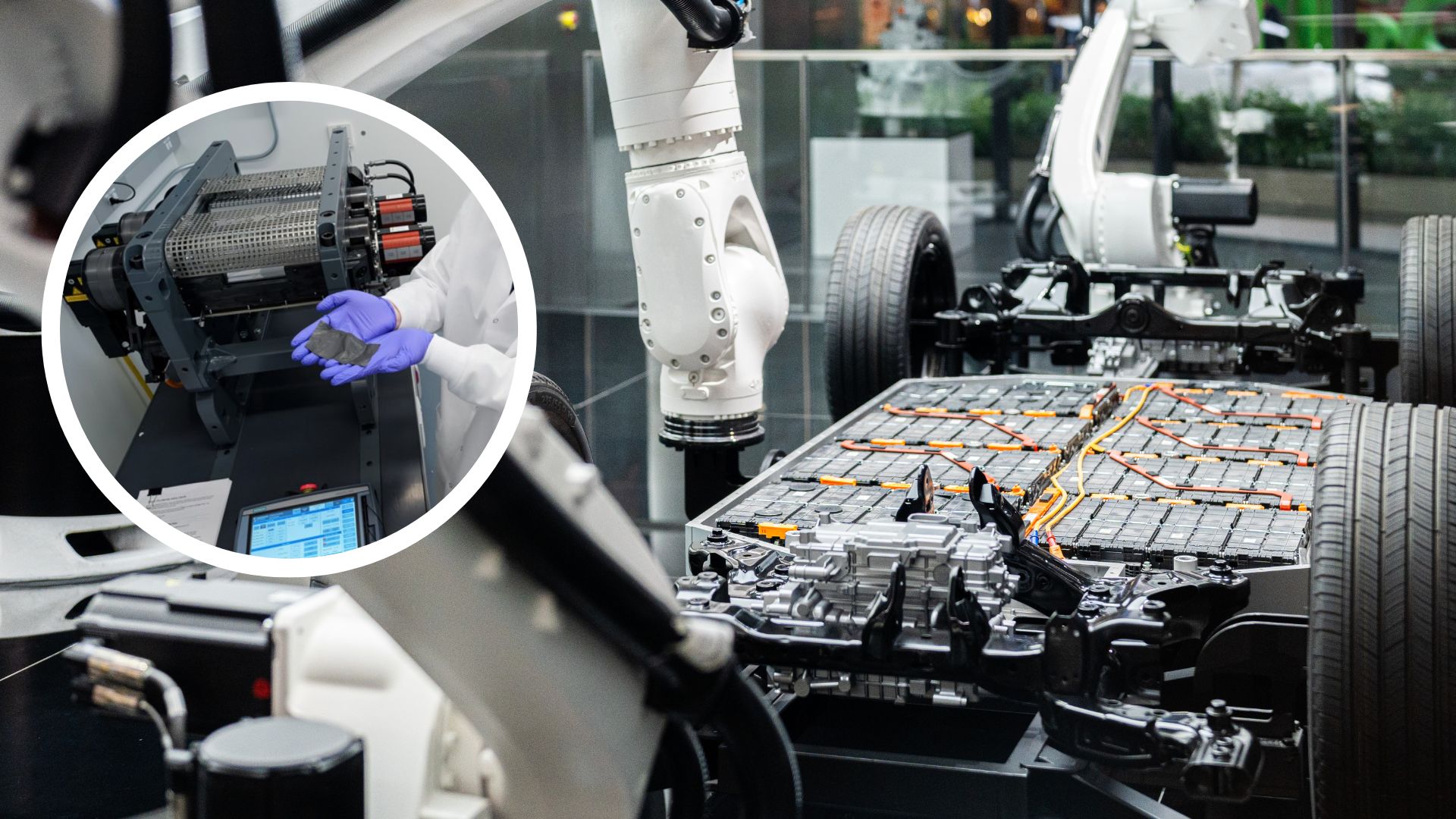
• Dry electrode breakthrough boosts EV battery life and power, cuts toxic waste New dry electrode design boosts conductivity and high-voltage stability in lithium-ion batteries. • A new dry electrode design developed by researchers at the University of Chicago could make lithium-ion batteries cheaper, cleaner and more powerful at the same time. • Battery makers have long pursued dry processing to eliminate toxic solvents used in conventional slurry-based electrode manufacturing. • The dry method reduces cost, simplifies production and lowers environmental impact. • Now, researchers say it also improves battery performance. • The team at the University of Chicago Pritzker School of Molecular Engineering found that dry-processed electrodes deliver stronger conductivity, thicker structures and better high-voltage cycling compared with traditional slurry-made electrodes.
Article Summaries:
- Researchers at the University of Chicago have developed a dry‑electrode design that improves lithium‑ion battery performance while eliminating the toxic solvents used in conventional slurry‑based manufacturing. The dry process produces electrodes with higher conductivity, thicker structures, and better high‑voltage cycling stability. Key to the improvement is a synergistic interaction between the polymer binder and carbon conductive additive, which enhances the conductive network and reduces side reactions at high voltage. The breakthrough offers a cheaper, cleaner production route and could enable more powerful, longer‑lasting batteries for electric vehicles.
Sources: