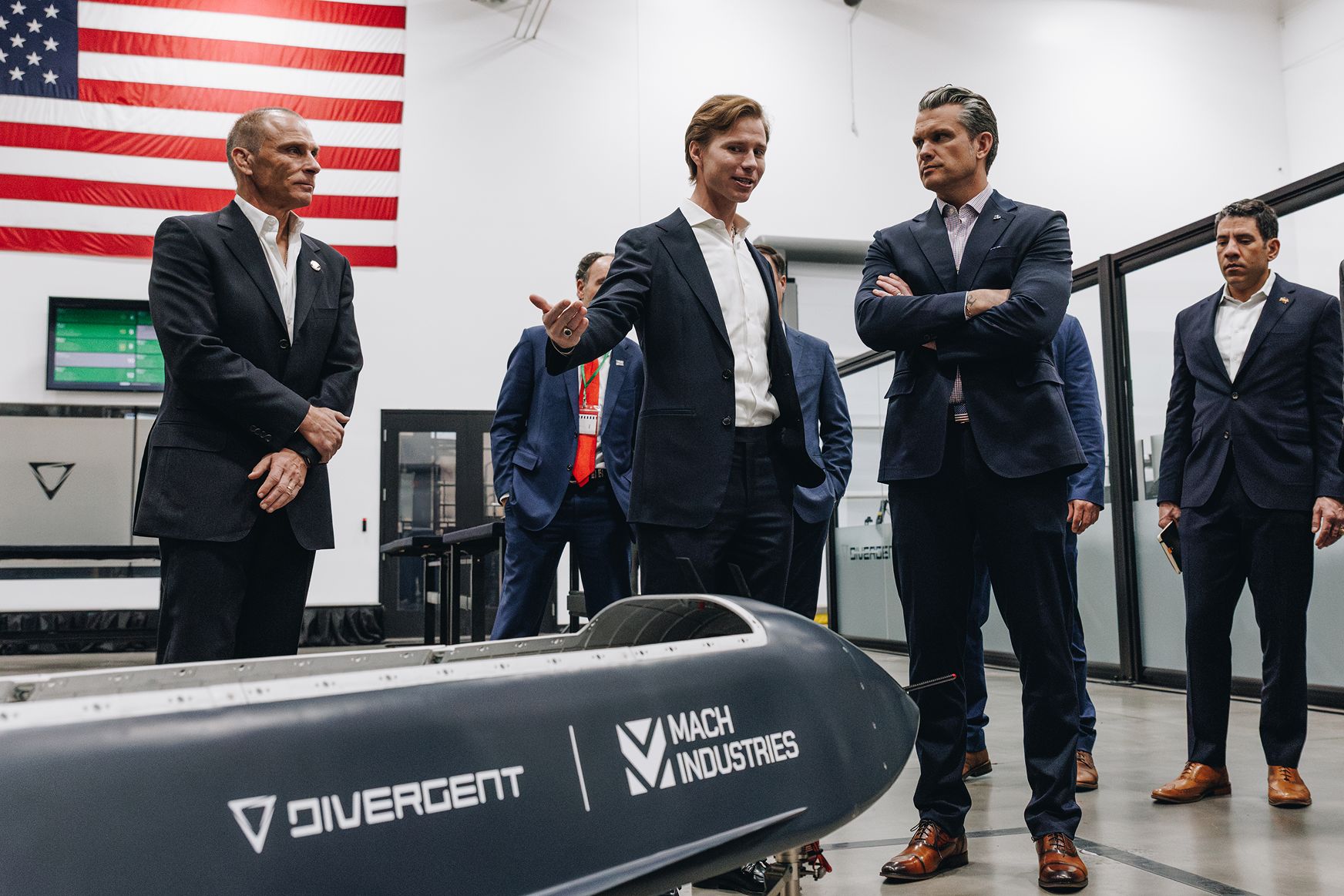
• AI-driven 3D manufacturing solutions providerDivergent Technologiesand US defense manufacturing companyMach Industrieshave partnered to create Venom, a flight-demonstration prototype aircraft. • The aircraft “moved from concept to flight-ready prototype in 71 days,” according to Alex Lovett, the Principal Deputy Assistant Secretary of War for Mission Capabilities in the Office of the Under Secretary of War for Research and Engineering (OUSW(R&E)). • By integrating digital design, additive manufacturing, and modular avionics, the project accelerates development, cuts costs and enables scalable, high-performance production, redefining how autonomous defense systems are designed, manufactured, and deployed. • Lovett added, “This isn’t just an impressive metric-it’s a direct enabler of our strategy to achieve affordable mass and support the SECWAR’s ‘Drone Dominance’ vision. • ODASW(P&E) is committed to sponsoring collaborations like this that accelerate rapid acquisition and deliver urgent, low-cost munitions to the warfighter.” Accelerating Design and Manufacturing Mach Industries provided the baseline requirements and modular architecture, leveraging avionics and simulation from existing flight-proven systems to speed development. • Divergent executed the digital design and 3D printing of the Venom airframe, including wings, fuselage, skins, and control surfaces, producing monolithic assemblies instead of traditional multi-part constructions.
Article Summaries:
- Divergent Technologies and Mach Industries announced that their joint effort produced the Venom flight‑ready prototype in just 71 days, a record‑speed turnaround highlighted by the Office of the Under Secretary of War for Research and Engineering. The project combined Mach’s modular architecture with Divergent’s Adaptive Production System (DAPS), which uses digital design and additive manufacturing to create monolithic airframe components, cutting part count and integration time. Officials said the rapid cycle supports the Department of Defense’s “Drone Dominance” strategy by enabling affordable mass production of autonomous defense systems. The collaboration exemplifies a shift toward digitally driven, low‑cost, and scalable aerospace manufacturing.
Sources: